A partial repipe replaces one section of a house’s water supply, such as a bathroom, the kitchen branch, the hot side, or one run that keeps leaking, and leaves the rest of the old pipe in service. Grackle Repiping Austin offers partial repiping across Austin when a failure is confined to one area and the pipe feeding it is sound. The important word is boundary. A partial repipe is not a smaller whole-house repipe: old pipe stays in the walls, and an honest estimate shows exactly where it is. When the failing pipe runs through the whole house, a whole-house repipe is the right scope instead.
When a partial repipe makes sense
A partial repipe fits when the problem has an edge. Cases that fit look like this:
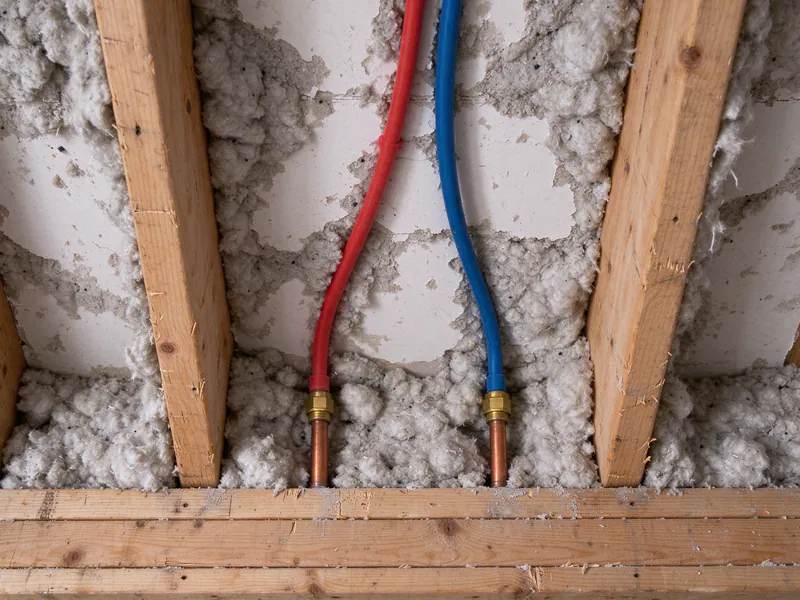
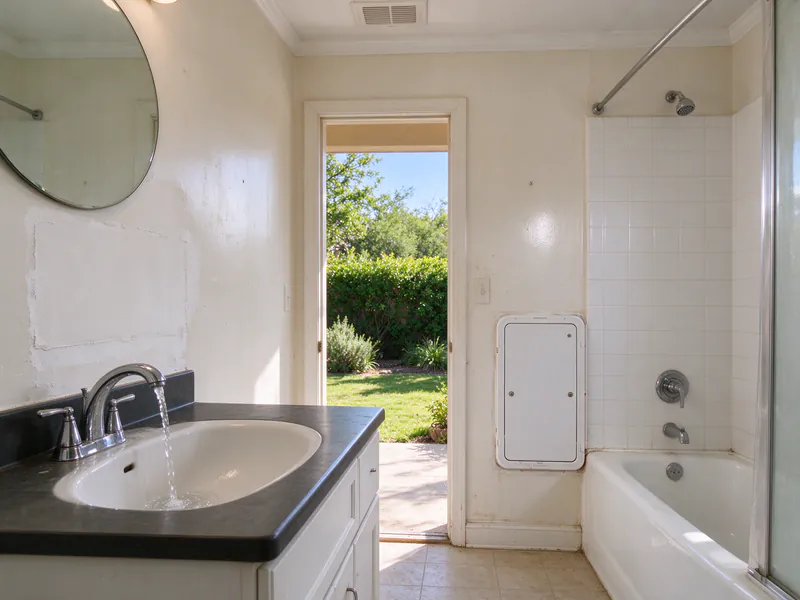
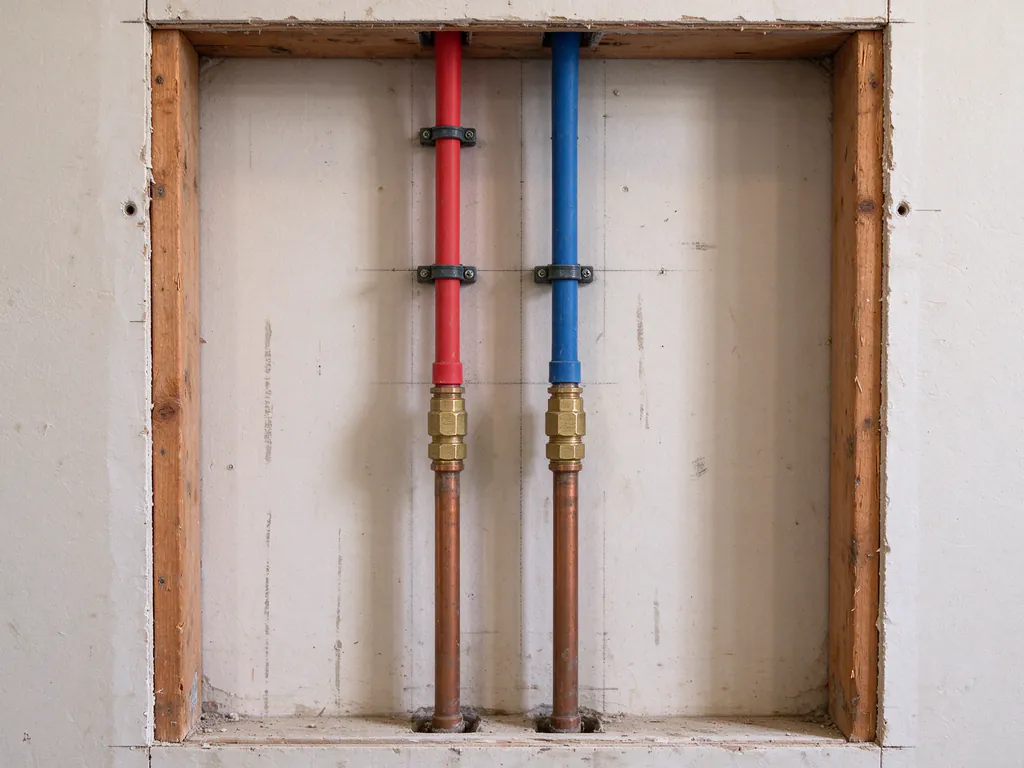
A remodel opens the walls anyway. A bathroom or kitchen gutted to the studs is the cheapest moment to replace the supply lines behind it. The new pipe ends at a transition fitting in the opened wall or in the attic above, where it joins the existing branch.
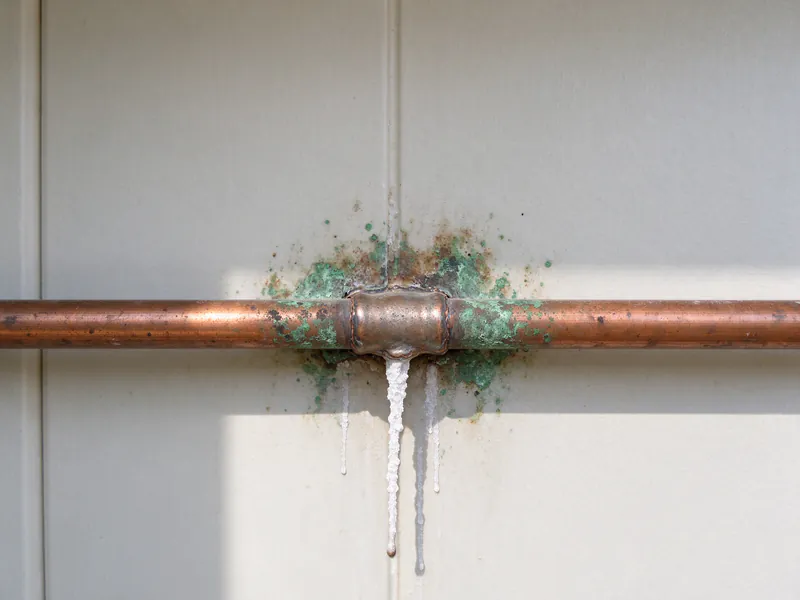
One branch keeps failing. Where pinhole leaks keep appearing on one run, such as the hot line to the back bathroom, replacing that run can be the right size of job. The copper pinhole leaks guide explains what drives repeat leaks and when they point to the whole system instead.
One line under the slab failed. Abandoning a leaking under-slab line and running a new one overhead is a partial repipe by another name, and it has its own page: slab leak reroute.
One material is the problem. Some Austin houses carry two or three materials from past repairs. If a single section is polybutylene, Kitec or CPVC and the rest is sound copper or PEX, replacing the problem material alone can make sense. The CPVC guide covers when aging CPVC is worth replacing, and the guide to identifying your pipes shows what each material looks like.
When a partial repipe is the wrong answer
The test is whether the old pipe that stays will undo the new pipe’s job.
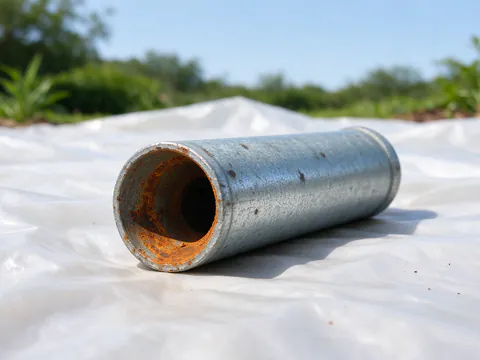
Galvanized upstream. Galvanized steel scales from the inside. A new bathroom fed from a scaled galvanized main still gets only the water the old pipe passes, so a partial repipe in a mostly galvanized house tends to disappoint on pressure. Homeowners report exactly this question: a 1940s house with nearly all galvanized pipe, and an owner who wants new copper in one bathroom tied into the old pipe. It can be done, but the flow problem moves rather than goes away. Galvanized pipe replacement covers the usual answer.
The same pipe is failing in several places. When the leaks move around the house, they are telling you about the material, not one bad branch. Replacing sections one at a time ends up paying for the whole repipe in pieces, with more setup and more openings.
Polybutylene throughout. Polybutylene’s history of failures is tied to the material and its fittings, not to one location. Replacing the part that leaked leaves the same risk everywhere else. The polybutylene pipe replacement page covers that scope.
Homeowners also report replacing pipe section by section as it fails, especially after a high whole-house quote. That can work as a budgeting plan when it is a deliberate sequence, with each stage drawn so the next one connects cleanly. It works poorly as a series of emergencies.
What stays old, and how the two meet
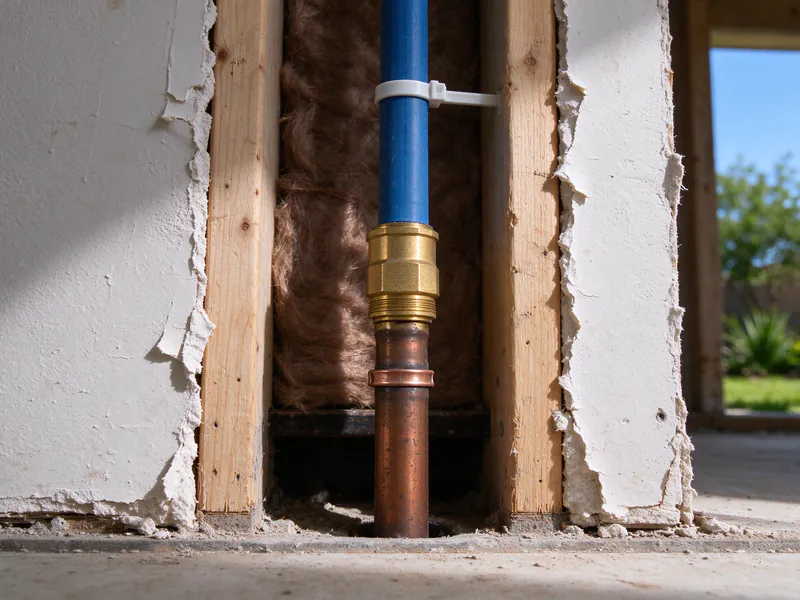
Every partial repipe has transitions where new pipe joins old, and those joints are where the job is won or lost.
Listed transition fittings. PEX to copper, copper to CPVC and PEX to galvanized each use fittings listed for that pair. Where copper or brass meets galvanized steel, the joint needs dielectric separation; two dissimilar metals in contact in water corrode the steel side faster.
Accessible transitions. A transition is a joint, and joints are where future leaks start. Where it can, the boundary sits in the attic, the crawlspace or behind an access panel rather than buried in a finished wall.
The old pipe sees the new conditions. Cutting over part of a system disturbs the rest. Galvanized pipe can shed scale when flow changes, and old fixture valves upstream of the work may weep once they are turned. Austin’s amendment 608.2 requires a pressure regulator with a strainer when static pressure tops 65 psi, set to 65 psi or less, with an expansion tank downstream; on a partial repipe that regulator protects the old pipe as much as the new.
A written boundary. A partial repipe never means the old pipe is gone. The estimate should list the fixtures on new pipe, where each transition sits and which runs remain, including lines abandoned under the slab.
Is a partial repipe enough for your house?
The first visit checks the pipe material on both sides of the boundary, the pressure and the access before recommending a scope.
How a partial repipe runs
The first visit checks the pipe material throughout the house, not just in the failing section, because the retained pipe decides whether the partial makes sense. It reads static pressure at a hose bib, checks attic and crawlspace access, and finds where walls can open. On a slab house the new section usually runs through the attic and drops into the walls it serves; on a pier-and-beam house it can run in the crawlspace. Lines run through an attic need at least R-4 insulation under amendment 312.6.1.
Water to the affected section is off while it is cut over and is back on at the end of each work day. The new section is pressure tested and inspected before walls close, then flushed. Reachable old pipe in the section is removed; pipe in the slab or behind finished walls that do not need opening is capped and abandoned in place.
Permits
A partial repipe replaces and rearranges pipe, so in Austin it needs a City plumbing permit pulled by a Texas responsible master plumber registered with the City. The City issues whole-house and partial repipes the same way, as plumbing permits. Suburbs run their own offices and codes; Round Rock and Cedar Park, for example, permit plumbing under the International Plumbing Code. The repipe permit guide explains both.
What a partial repipe costs
There is no single published range for a partial repipe, because the scope can be one vanity or half a house. The estimate prices the section you choose, and these are the things that move it:
- the number of fixtures on the new section
- how complicated the route is from the transition point to those fixtures
- the number of wall and ceiling openings, and tile or cabinets in the way
- whether the section includes the water heater connections
- the patch and paint scope
- a pressure regulator and expansion tank where pressure tops 65 psi
- the City plumbing permit and inspections
For whole-house and reroute figures, see the Austin repipe cost guide. The is repiping worth it guide helps compare a partial now against a whole-house job once.