Grackle Repiping Austin replaces the water supply pipe in houses across Austin, from the main shutoff valve to every faucet, toilet, shower and appliance connection. A whole-house repipe is the right scope when the pipe itself has become the problem: galvanized steel that has scaled shut, polybutylene from the 1980s and 1990s, or copper that keeps springing pinhole leaks. It is the wrong scope when one line under the slab has failed and the rest is sound, which is the situation a slab leak reroute was made for.
What happens on the first visit
The walk-through decides whether the house needs a whole-house repipe at all, and if so, where the new pipe can run. It covers four things.
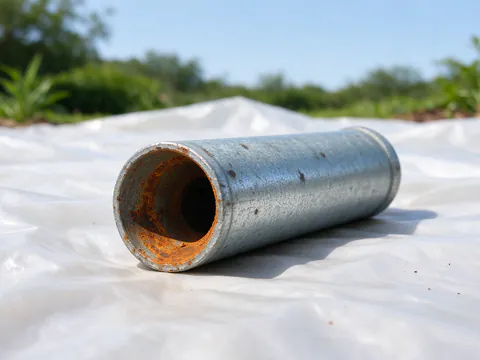
The pipe you have. Material shows at the water heater, under sinks and at the main shutoff. Galvanized steel, copper, gray polybutylene, orange or cream CPVC and red and blue PEX each fail in their own way, and some houses carry two or three of them from earlier repairs. The guide to identifying your pipes shows what each looks like.
The pressure. A gauge on a hose bib reads static pressure. Austin’s amendment to the plumbing code requires a regulator with a strainer when it tops 65 psi, set at 65 psi or less, with an expansion tank after it. High pressure does not cause old pipe, but it shortens the life of whatever is installed, so a repipe in a high-pressure house includes the regulator.
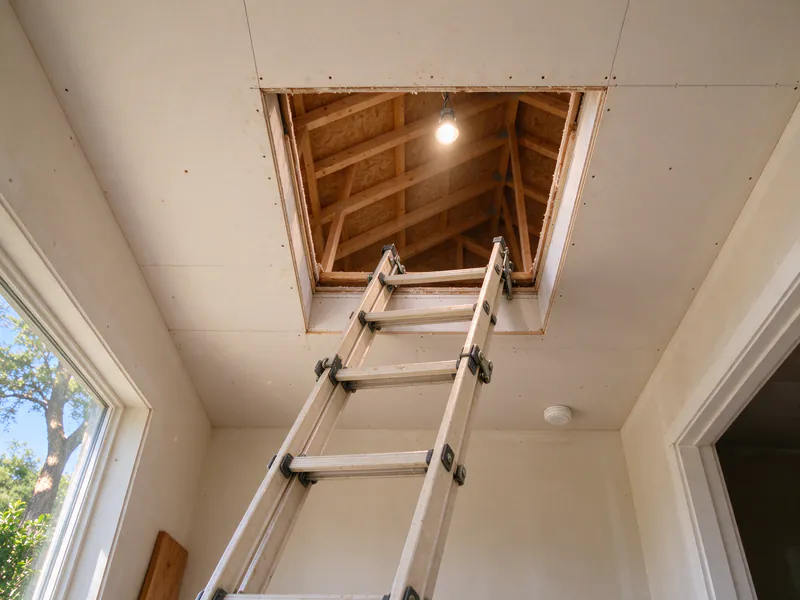
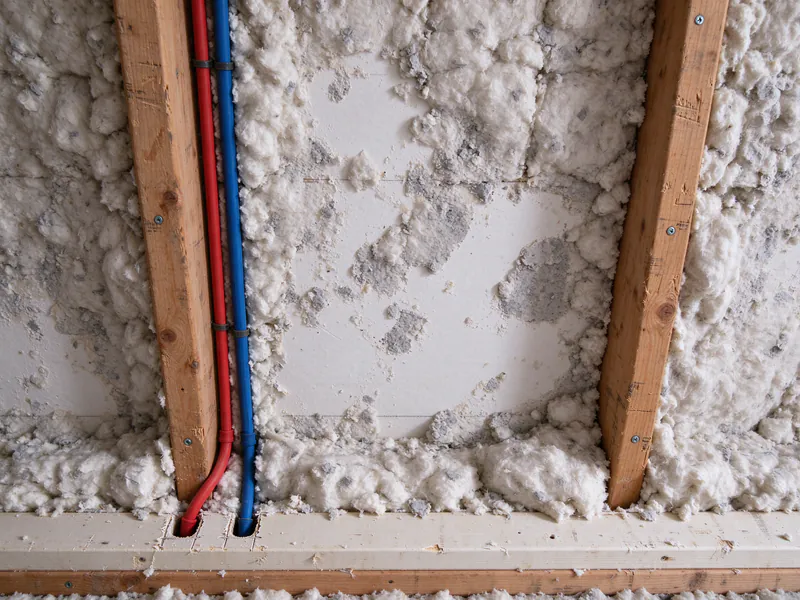
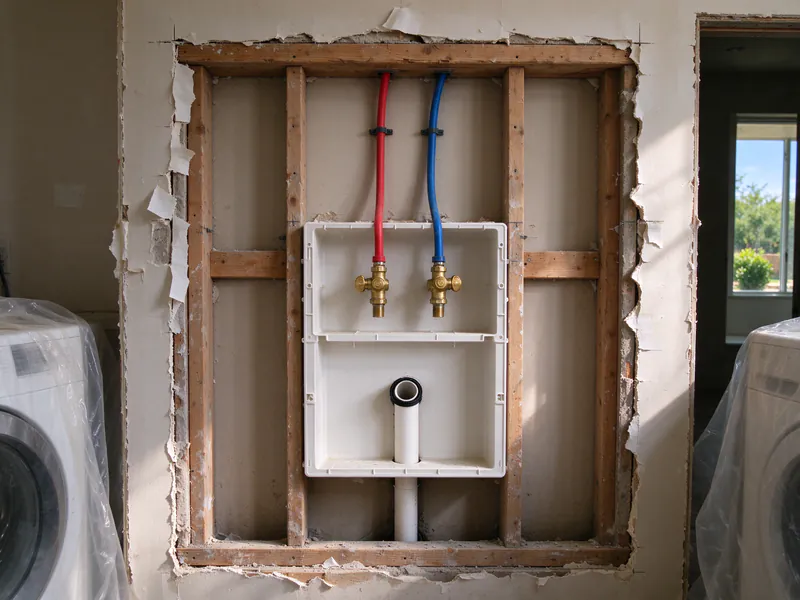
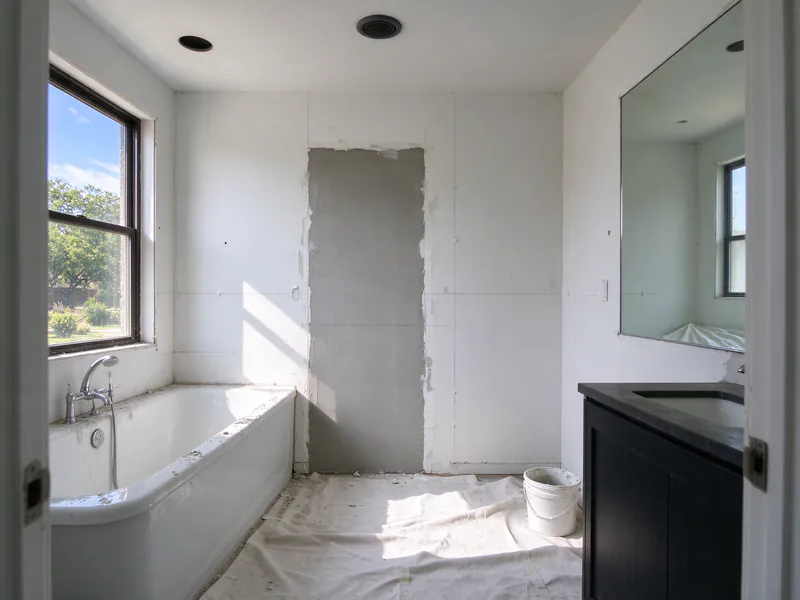
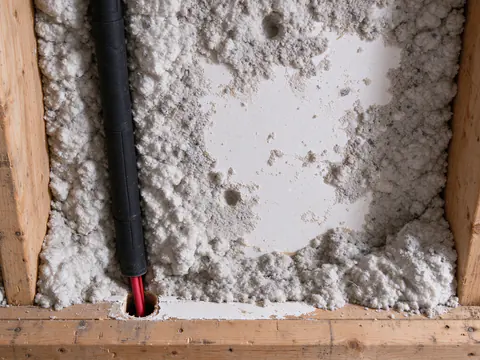
The routes. On a slab house, new lines usually run through the attic and drop down interior walls. On a pier-and-beam house they run through the crawlspace. The walk-through checks attic headroom, crawlspace height and which walls back onto bathrooms and the kitchen, because those choices decide how many openings the job needs.
The finishes. Tile showers, built-in cabinets and plaster walls change how access is planned. The estimate lists each opening and how it will be closed.
Why Austin repipes mostly run overhead
About 43% of Austin’s homes were built in 2000 or later, but the houses that come up for repiping are older: the City’s open permit data shows water repipes clustered in ZIP codes such as 78757, 78731, 78745, 78749 and 78704, where many homes date from the 1950s through the 1980s. Austin is a slab town: across five years of City plumbing permits, descriptions mention slabs more than three times as often as pier-and-beam crawlspaces. On a slab house, the original water lines run under or inside the concrete.
Breaking a slab to replace pipe in place is slow, messy and hard to justify when an attic sits above every room. So a whole-house repipe on a slab house abandons the under-slab lines and runs new pipe overhead. In the parts of central, south and east Austin that sit on Houston Black clay, a soil that shrinks and cracks in dry spells, getting supply lines out of the slab also takes them away from the ground movement that stresses buried pipe.
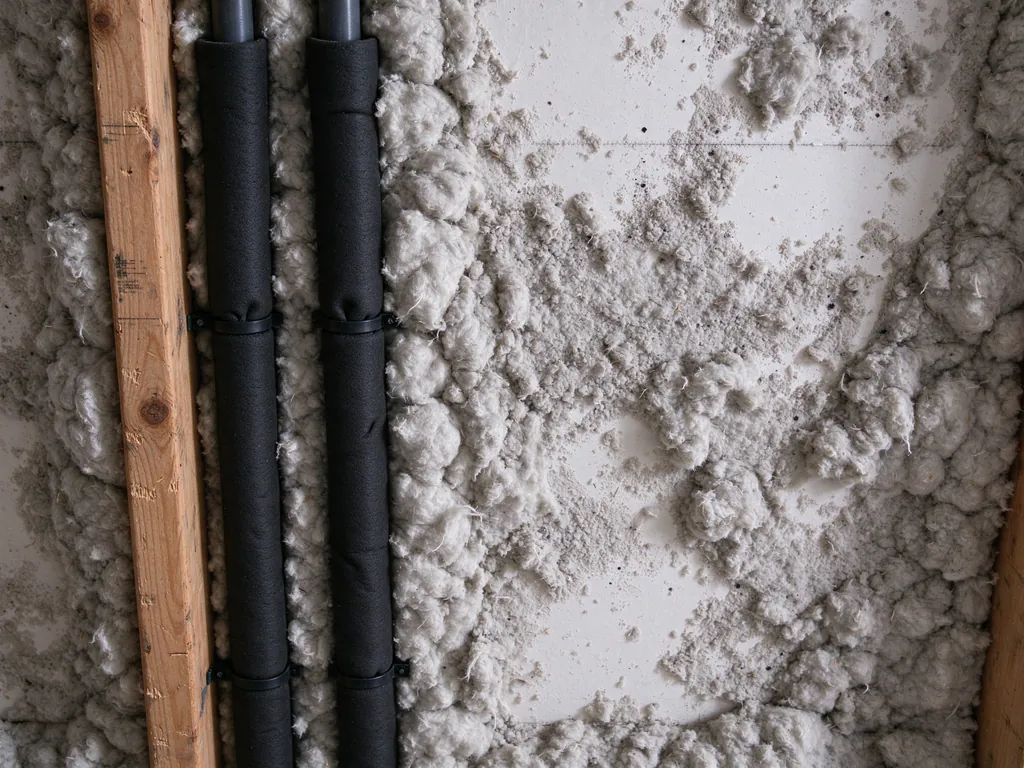
Overhead runs bring their own rules. Austin requires at least R-4 insulation, five-eighths of an inch thick or more, on water lines outside the building’s thermal envelope, which includes a vented attic. The lines also need support off the roof deck, where summer temperatures run hottest. The February 2021 winter storm, which produced 123 freeze-related plumbing permits in Austin between February and April that year, showed what happens to poorly protected lines in cold spaces.
PEX or copper for an Austin repipe
Both are allowed for water distribution in a house under Austin’s code, and neither is the right answer for every house.
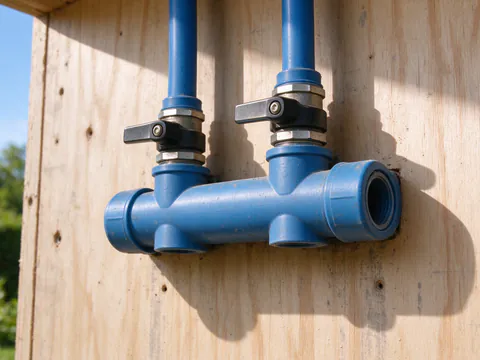
PEX is flexible tubing joined with crimp, expansion or press fittings. It snakes through attics and down walls in long runs with few joints, which means fewer openings and less labor on a slab house. It must stay out of sunlight and be supported to the manufacturer’s spacing. The PEX repiping page covers PEX-A and PEX-B and the choice between a manifold and a trunk-and-branch layout.
Copper is rigid, joined by soldering or press fittings, and tolerates heat and exposure better. It needs more joints and more access to route through finished walls, which shows up in the price. Austin Water lime-softens its water to a pH near 9.7, and its own report says the treatment helps coat pipes and prevent corrosion, and copper levels in its 2024 tap sampling were far below the action level. The copper repiping page explains when copper earns its cost.
The PEX vs copper guide compares them in detail.
How much a whole-house repipe costs in Austin
A typical Austin-area range for a single-family whole-house repipe is $4,500 to $15,000+. Larger homes, slab homes with long overhead runs and copper jobs can run higher. With PEX and typical attic and wall access, a typical home falls at about $4,500 to $9,000.
What moves a particular house within that range:
- the number of bathrooms and fixture groups, and whether there is a second story
- whether the new lines can run through an attic or crawlspace, and how long those runs are
- PEX or copper, and a manifold or trunk-and-branch layout
- tile, built-in cabinets and plaster walls that make access slower
- a pressure regulator and expansion tank where pressure tops 65 psi
- the scope of drywall patching and painting
- the City plumbing permit and its inspections
The Austin repipe cost guide breaks these down, and the cost estimator gives a range for your house without a phone call.
Permits and inspection
The City of Austin issues repipes as plumbing permits. Under Austin’s amendment 104.1.1, only a responsible master plumber licensed by the Texas State Board of Plumbing Examiners and registered with the City can obtain one. The inspector checks the new piping, supports and test before walls are closed. The suburbs run their own offices: Round Rock and Cedar Park, for example, permit plumbing under the International Plumbing Code rather than the Uniform Plumbing Code. The repipe permit guide covers both.
Living in the house during a repipe
Most families stay home. Water is shut off while each section is cut over and is normally back on at the end of the work day. Openings are cut where lines reach fixtures, furniture near them is covered, and the patch scope is written down before work starts. The repipe timeline guide goes through a typical schedule.
Want to know which scope your house needs?
A whole-house repipe, a partial repipe or a single reroute each solves a different problem.
When a whole-house repipe is not the answer
Low pressure is the most common reason people ask about repiping, and pipe is not always the cause. A failing pressure regulator, a partly closed main valve or clogged aerators produce the same symptom. The low water pressure guide explains how each is checked. Rusty water can come from the water heater rather than the pipe. And one leak under the slab, in a house whose other pipe is sound, is usually a reroute, not a repipe.
A whole-house repipe also does not touch the drain and sewer lines, which are a different system with different failures; the guide on drains explains the line between them.