A typical Austin-area range for a whole-house repipe on a single-family house is $4,500 to $15,000+. With PEX and typical attic and wall access, a typical home comes in at about $4,500 to $9,000. Larger homes, slab homes that need long overhead runs and copper jobs can run above the top of the whole-house range. Grackle Repiping Austin publishes these ranges so you can budget before anyone visits; the estimate for your house replaces them.
Typical Austin repipe price ranges
| Work | Typical range | What it covers |
|---|---|---|
| Whole-house repipe, single-family | $4,500 to $15,000+ | All hot and cold supply lines from the main shutoff to the fixtures, connections and the pressure test |
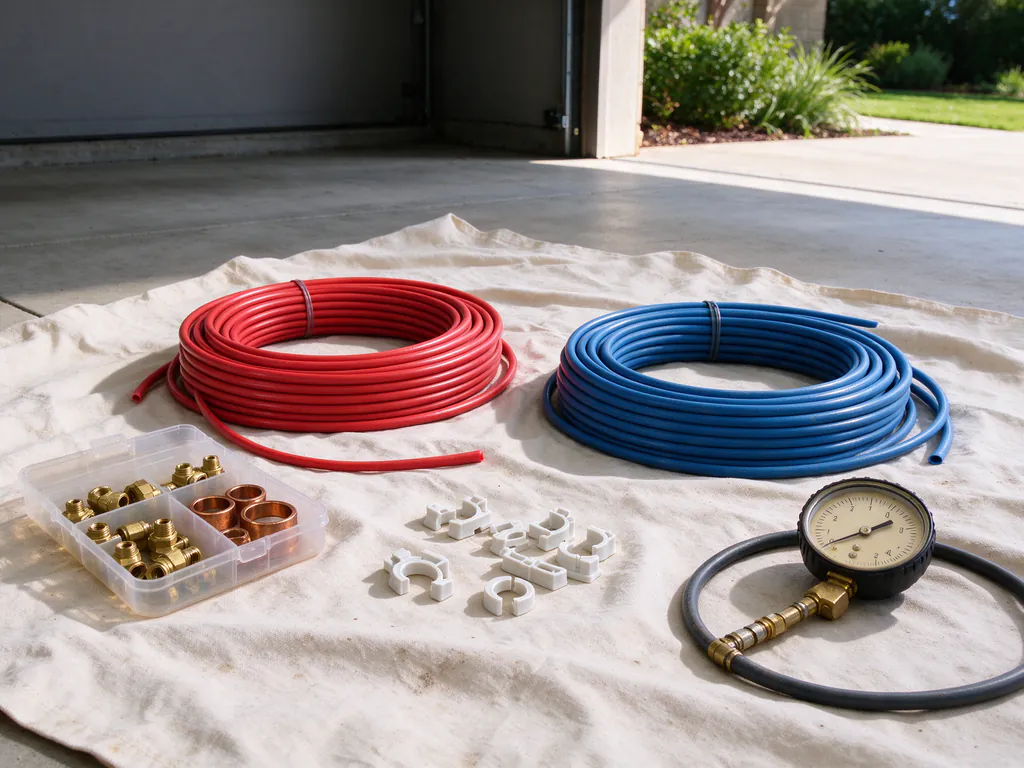
| PEX whole-house repipe, typical access | about $4,500 to $9,000 | The same scope in PEX run through an accessible attic or crawlspace |
| Slab leak reroute | about $4,000 to $9,750 | One leaking under-slab line abandoned and replaced overhead, before leak detection |
These are typical ranges for Austin-area projects, not quotes. A copper repipe has no separate published range here, because local figures disagree too much on its low end to state one honestly; it generally prices above PEX for the same house. A partial repipe is priced from its scope.
What’s inside an Austin repipe price
Most of a repipe price is labor and access, not pipe. This table shows the parts of the price that have a public figure behind them, and the parts that only the house itself can answer.
| Part of the price | What sets it | Austin figure |
|---|---|---|
| Plumber labor | Hours to run, connect, test and cut over; a second story and slab-only routes add hours | Austin-area plumbers earn a mean $30.65 an hour, against $34.70 nationally (BLS). The median is $30.20 locally and $30.67 nationally. |
| Pressure regulator and expansion tank | Required by Austin’s amendment to the plumbing code when static pressure tops 65 psi | Code rule from the City of Austin; priced per house |
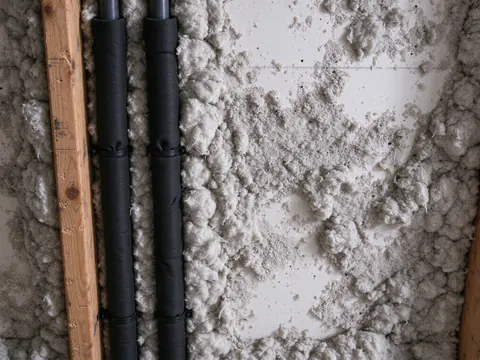
| Attic insulation | Austin requires R-4 insulation, at least five-eighths of an inch thick, on water lines outside the thermal envelope | Code rule; adds material and time on every attic run |
| Permit and inspections | A City plumbing permit pulled by a registered responsible master plumber | Fee from the City’s schedule, confirmed for the address; a failed inspection costs $83.85 to reinspect |
| Wall and ceiling openings | How many fixture groups, and whether walls are drywall, plaster or tile | No public figure; a written line in the estimate |
| Patch and paint | Whether the estimate closes openings only or also textures and paints | No public figure; a written line in the estimate |
A wage is not a billing rate. What a plumbing company charges per hour also carries licensing, insurance, vehicles, tools, permits and the time spent on estimates and inspections. The wage figures do explain one thing: Austin plumbers earn about the national median, so a high Austin quote is not explained by local wages. It is explained by the house.
What moves an Austin repipe up or down
Bathrooms and fixture groups. On a whole-house repipe, every bathroom, the kitchen, the laundry and each outdoor hose bib is a branch to run and connect. A two-bath house and a four-bath house of the same square footage price very differently.
One story or two. On a one-story slab house, every line drops from the attic. A second story adds drops through walls or chases from above, more openings and more time.
The route. Austin is a slab town, and new pipe on a slab house runs overhead. An open attic with headroom is the easy case. A low-slope roof, a finished attic room or a cathedral ceiling forces longer or harder routes. A pier-and-beam house with a workable crawlspace can be cheaper to repipe than a slab house of the same size.
PEX or copper. PEX bends through framing in long runs and needs fewer joints; copper needs more fittings and more open wall. The PEX vs copper guide explains the trade-offs beyond price.
Finishes. Tile showers, stone backsplashes and built-in cabinets slow access. Plaster walls, where a house still has them, are cut and patched differently from drywall. The repipe timeline guide explains how finishes change the schedule.
Pressure. Static pressure above 65 psi means a regulator and an expansion tank. Parts of Georgetown run at 80 to 100 psi, and its utility recommends a private regulator for every home. The pressure regulator guide covers the rule.
What the estimate leaves to you. Patching, texture, paint and moving furniture are the lines most likely to differ between two estimates for the same house.
Permit costs in Austin and nearby cities
The City of Austin issues repipes as plumbing permits through Development Services, and the fee comes from its residential fee schedule. Which line applies depends on whether the repipe stands alone or rides with other work, so the fee is confirmed for the address. A reinspection after a failed inspection is $83.85. Round Rock lists a residential standalone plumbing permit at $50, with two inspections of the same type included. Other suburbs set their own fees; the repipe permit guide covers who issues what.
Programs that can help with the cost
| Program | Who runs it | What it pays | Fit for a repipe |
|---|---|---|---|
| Plumbing Repair Program | City of Austin Housing | Grants up to $15,000 for homeowners at or below 100% of median family income | Covers critical plumbing repairs; ask whether a repipe qualifies |
| Galvanized service line replacement | Austin Water | Replaces flagged galvanized service lines between the meter and the building; owners can sign up to have it done for free | The service line only, not the pipe inside the house |
| Water leak bill adjustment | Austin Water | Adjusts a bill raised by a leak, with a paid repair receipt submitted within 90 days of the repair | Helps after a slab leak; not a repipe subsidy |
There is no federal or Texas program that pays for interior repiping. Austin Water’s residential rebate list no longer includes a pressure regulator rebate.
Want the range for your own house?
The cost estimator asks about bathrooms, stories, foundation and material, and shows where your house lands.
Repipe or reroute: the cheaper fix is not always the cheaper choice
A single slab leak can be rerouted for less than a whole-house repipe, and when the rest of the pipe is sound, that is the right call. When leaks keep coming, each reroute and each round of leak detection adds up, and a repipe can become the better use of the money. The slab leak reroute cost guide and the repair or reroute guide walk through that decision.
Getting an estimate you can compare
Two estimates for the same house are only comparable when they list the same things: the material and layout, the number of fixture groups, the permit, the pressure test, the regulator if needed, the openings and the patch scope. Ask for each as a written line. The cost estimator gives a starting range, and an estimate from Grackle Repiping Austin lists every line before work starts.