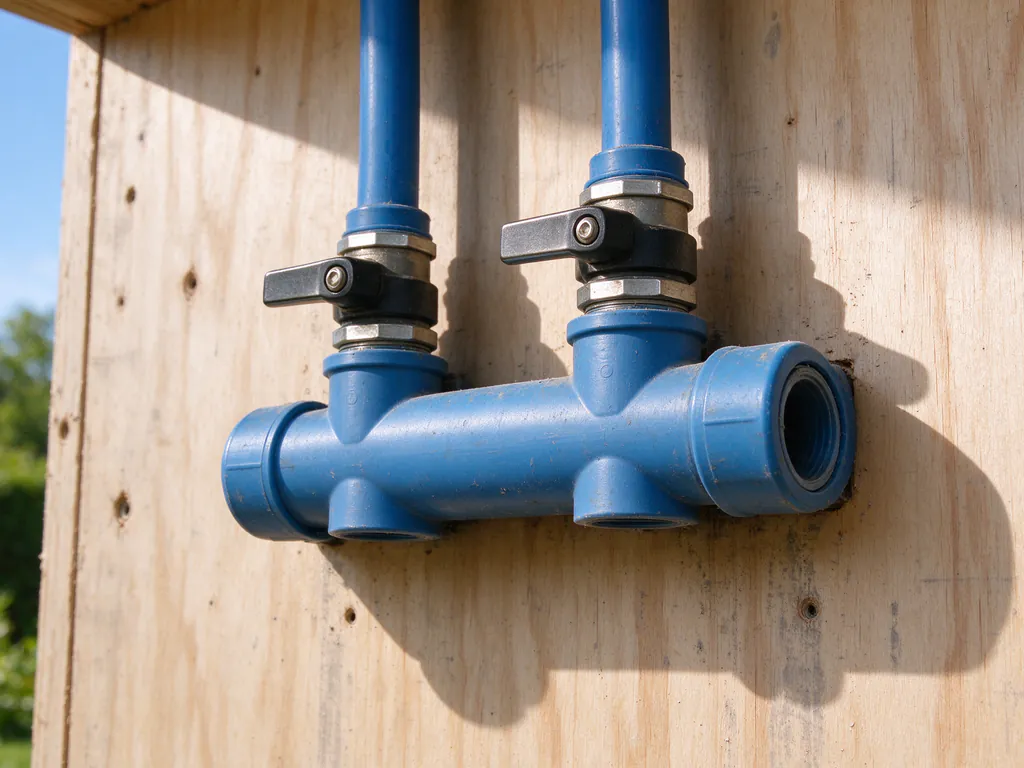
PEX is the pipe material named most often in Austin plumbing permits: in City permit descriptions from October 2021 to October 2026, it is named 225 times, against 87 for copper. Grackle Repiping Austin offers and manages PEX repipes across Austin, replacing old supply pipe with cross-linked polyethylene tubing run through the attic, walls or crawlspace to every fixture. A PEX repipe in Austin still involves real choices: which type of PEX, which fittings, and which layout. Those choices change how the system performs for decades, and they belong in writing in the estimate.
The work is done by licensed and insured plumbing contractors under a City plumbing permit. The whole-house repiping page covers the full scope; this page covers what is specific to PEX.
What happens on the first visit
The visit checks the pipe you have now, reads static pressure at a hose bib, looks at attic or crawlspace access and finds where walls can open. For a PEX repipe it also looks for a place a manifold could go, such as a garage wall, a utility closet or a central hallway, and measures how far the farthest bathroom is from the water heater. Those two facts decide the layout, and the layout drives the schedule in the repipe timeline guide.
PEX-A and PEX-B
Both are cross-linked polyethylene, and both are made to the same ASTM standard for hot and cold water tubing. They differ in how the cross-linking is done, and that changes how they handle in an attic.
PEX-A is cross-linked while it is formed. It is the more flexible of the two, it holds a tighter bend without kinking, and a kink can often be closed with heat. It is joined with expansion fittings: the tubing end is stretched, slipped over the fitting, and shrinks back to grip it.
PEX-B is cross-linked after it is formed. It is stiffer, holds its shape on straight runs, and costs less. It is joined with crimp or clamp fittings: an insert goes inside the tubing and a copper ring or stainless clamp is compressed around the outside.
Neither is the right answer for every house. PEX-A’s flexibility and fittings help on long, tight attic routes and in a manifold layout with many bends. PEX-B is a sound choice on a trunk-and-branch layout with straighter runs. What matters more than the letter is that the tubing, fittings and tools are from a matched, listed system and installed to the maker’s instructions.
Expansion, crimp and the fittings themselves
Fittings are where a PEX system is most likely to have a problem, so the choice deserves a line in the estimate.
Expansion fittings sit inside tubing that has been stretched to fit them, so the opening through the joint stays close to the tubing’s full size. They are used with PEX-A.
Crimp and clamp fittings use an insert that sits inside the tubing, which narrows the opening at every joint. On a long trunk-and-branch layout with many tees, those restrictions add up, which is one reason the main lines are sized with care.
Brass or polymer bodies. Fittings come in brass or in an engineered polymer. Brass fittings for drinking water must be lead-free under federal law. Some water chemistries can leach zinc out of ordinary brass over time, so dezincification-resistant brass or polymer fittings are a reasonable choice; the estimate says which is planned.
Manifold, trunk-and-branch or both
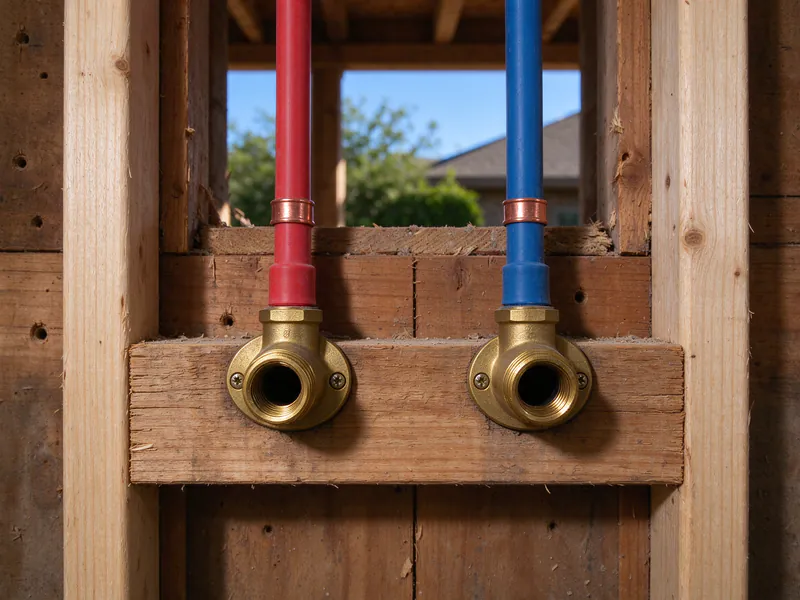
A home-run manifold gives each fixture its own line from a central manifold, with a labeled shutoff for each. There are almost no fittings hidden in walls or the attic, and a small line to a single sink delivers hot water sooner because it holds less water. It uses the most tubing, and it needs a central, reachable spot for the manifold.
A trunk-and-branch layout runs larger mains with tees to each fixture group, the way copper systems were built. It uses less tubing and suits long ranch houses where a manifold would mean very long runs. It has more fittings in concealed spaces.
A hybrid runs a main to small remote manifolds near each bathroom group. It suits two-story houses and houses with bathrooms at opposite ends.
Hot water wait depends on distance and on how much water sits in the line between the heater and the tap. A repipe can shorten it with sensible sizing and routing; where the far bathroom is simply far away, a recirculation setup is the tool for that, and it changes how the hot lines are laid out, so it is decided before the tubing is run.
PEX in an Austin attic
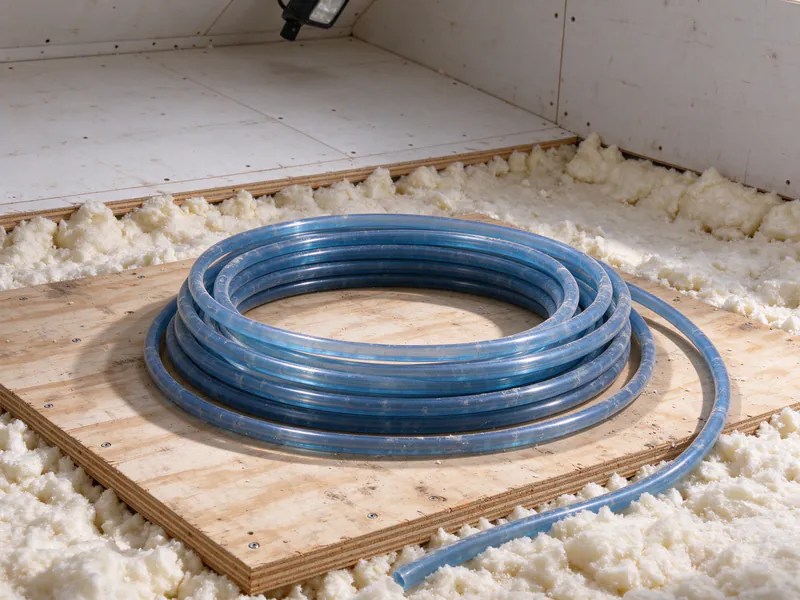
On a slab house, a PEX repipe almost always runs overhead. Across five years of City plumbing permits, descriptions mention slab work more than three times as often as pier-and-beam crawlspaces, and the attic is where new lines go. The same overhead route is used for a single slab leak reroute.
Heat. PEX is rated for temperatures well above what an attic reaches, but it softens as it warms and sags if it is not supported. It is supported at the spacing the code and manufacturer set and kept off the roof deck, where summer temperatures peak.
Sunlight. PEX degrades under ultraviolet light. Every tubing marking includes a UV rating that limits how long it can be exposed, and attic runs near gable vents or ridge openings need covering.
Freeze. PEX tolerates a freeze better than copper because it stretches, but it is not freeze-proof, and its fittings are the weak point. Austin requires at least R-4 insulation, five-eighths of an inch thick or more, on water lines outside the thermal envelope. Lines laid low against the ceiling drywall, under the blown insulation, stay warmer than lines strung high. The February 2021 storm, which brought 123 freeze-related plumbing permits in Austin between February and April that year, showed what happens to exposed lines; the frozen pipes guide covers prevention. The PEX in a Texas attic guide covers routing in detail.
Austin water and PEX
Austin Water treats lake water with lime softening to a pH near 9.7 and disinfects it with chloramine, averaging about 2.3 parts per million. Chlorine-based disinfectants slowly age plastic tubing, which is why PEX carries a chlorine resistance rating. It is the first digit of the four-digit material code printed on the tubing, and for a whole-house repipe with continuous hot water use, the highest rating is the one to look for. Round Rock, Cedar Park and Kyle deliver much harder water; that scale settles on valves and fittings more than on the tubing itself. The Austin hard water guide covers the differences, and the PEX drinking water guide covers NSF/ANSI 61 listing and taste and odor questions.
PEX-A or PEX-B, manifold or trunk?
The walk-through looks at your attic, your bathrooms and your pressure before anyone recommends a layout.
What a PEX repipe costs in Austin
A typical Austin-area range for a whole-house PEX repipe with typical attic and wall access is about $4,500 to $9,000. Slab homes needing long overhead runs and larger homes run higher. The broader whole-house range, covering every material and layout, is $4,500 to $15,000+.
What moves a house within the PEX range:
- the number of bathrooms and fixture groups, and whether there is a second story
- the layout, since a home-run manifold uses more tubing and a trunk layout more fittings
- PEX-A with expansion fittings or PEX-B with crimp fittings
- attic headroom, run length and the number of drops
- a pressure regulator and expansion tank where static pressure tops 65 psi, covered in the pressure regulator guide
- the patch scope for each opening
The Austin repipe cost guide explains each driver, and the cost estimator gives a range for your house.
Permits, testing and what happens after
Austin’s 2024 Uniform Plumbing Code allows PEX for water distribution, and Round Rock, Cedar Park and other suburbs on the International Plumbing Code allow it too. In Austin, a responsible master plumber registered with the City pulls the permit. The new system is pressure tested before walls close, inspected, then cut over and flushed, and each fixture is checked for leaks and for hot and cold on the correct side. The repipe permit guide covers each city.
If the house still has old metal pipe, the change to PEX can affect electrical grounding, which the galvanized pipe replacement page explains. If you are still choosing a material, the PEX vs copper guide and the copper repiping page lay out the trade-offs.