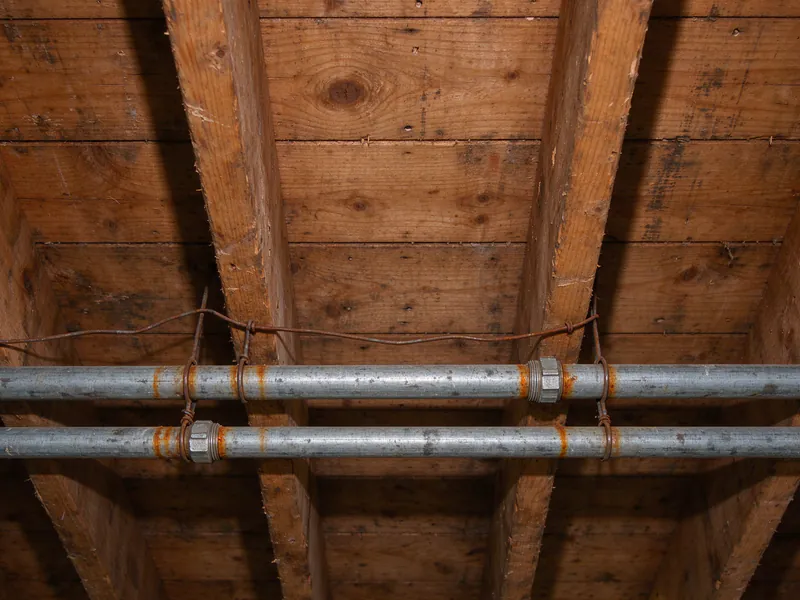
Galvanized steel was the standard supply pipe in houses built from the 1940s into the 1960s, and it fails from the inside. Grackle Repiping Austin offers and manages galvanized pipe replacement across Austin, replacing scaled steel supply lines with PEX or copper under a City plumbing permit. Galvanized pipe replacement in Austin usually means a whole-house repipe, because the steel runs from the main to every fixture; sometimes a partial repipe fits when earlier owners already replaced part of it. The work is done by licensed and insured plumbing contractors.
The steel shows up where the houses are oldest. Galvanized pipe is named in 83 Austin plumbing permit descriptions from October 2021 to October 2026, clustered in 78757, 78703, 78702 and 78704; the North Central Austin, East Austin and South Central Austin pages cover three of those ZIP codes. Those ZIP codes hold some of the city’s oldest housing: 59.8% of homes in 78757 were built before 1970, and 55.9% of homes in 78722 before 1960.
What happens on the first visit
The visit checks the pipe material, using the same clues as the pipe identification guide, at the water heater, under sinks, at the main shutoff and in the crawlspace or attic. It reads static pressure at a hose bib and then compares it with what the fixtures deliver, because that gap is the measure of how much the steel is restricting the flow. It looks at access, and in older central neighborhoods that may mean a crawlspace: City permit descriptions mention pier-and-beam crawlspaces most often in 78751, 78703, 78704 and 78757. Where a house has plaster walls, the visit plans openings with that in mind.
How galvanized pipe fails
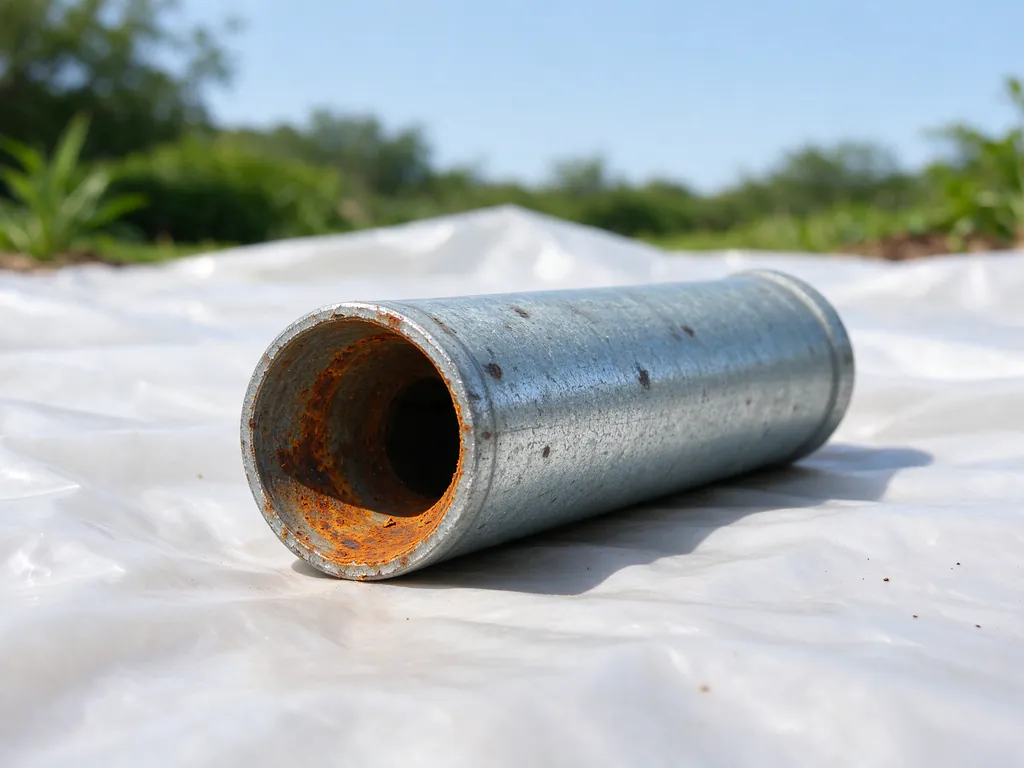
The zinc coating on galvanized steel protects it only while the zinc lasts. The zinc slowly gives itself up to protect the steel, and once it is gone, the steel rusts from the inside. Rust builds up as hard scale on the inner wall, and the bore narrows a little more every year. A half-inch line can end up passing a fraction of what it was sized for.
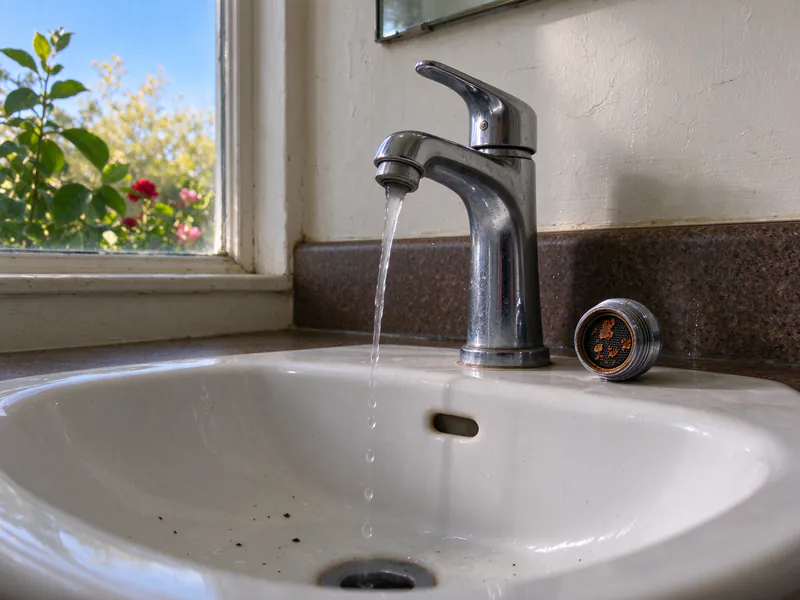
Restricted flow. The early sign is flow, not pressure. Static pressure at the hose bib, measured with nothing running, can be perfectly normal, because a gauge measures pressure, not volume. Open the shower and a sink at the same time, though, and the narrowed pipe cannot supply both. The fixtures farthest from the main suffer first, and the hot side, which also passes through the water heater’s connections, can suffer more.
Leaks at the threads. Galvanized pipe is joined by threading, and cutting threads removes part of the pipe wall. The thinnest point of every joint is where corrosion breaks through first, so leaks tend to start at fittings.
Rust in the water. Scale loosens whenever flow changes suddenly, such as after the water has been shut off, and comes out as brown or orange water that clears after running.
Low pressure has other causes too. A failing pressure regulator, a partly closed main valve or clogged aerators can look the same, and the low water pressure guide explains how each is checked. Replacing pipe will not fix a problem that is not in the pipe.
Rusty or discolored water: finding the source
Brown water does not prove the house pipe is the cause, so the source gets identified before anything is replaced.
If it shows up only on the hot side, the water heater is the first suspect; flushing or replacing the heater is separate work. If every tap in the house turns brown at once, right after street work or a main break, the disturbance probably came from the utility side, and Austin Water handles its mains. If brown water appears on both hot and cold, worst after the water has been off and at the fixtures farthest from the main, the galvanized pipe in the house is the likely source.
Austin’s treated water is not the cause. Austin Water lime-softens it to a pH near 9.7 and says the treatment helps coat pipes and prevent corrosion. That slows new corrosion; it does not reverse decades of scale already in a steel pipe. The Austin hard water guide covers water quality across the area.
Your house pipe and Austin Water’s service line program
Galvanized pipe can run on both sides of the house wall. Austin Water owns the line from the main to the meter. The property owner owns the line from the meter to the house, and everything inside.
Where that meter-to-house line is galvanized and its history upstream is unclear, Austin Water flags it as galvanized requiring replacement. Its inventory shows 738 active residential meters flagged, more than half of them in 78704, 78757, 78702 and 78751. Since 2025, Austin Water has been replacing these lines proactively; owners can sign up to have the line replaced at no charge or replace it themselves and ask for reimbursement of eligible expenses. The program covers the line from the meter to five feet from where it enters the building.
It does not cover the pipe inside the house, or the last five feet and the entry. If you have received a notice, the sensible order is to let the program replace its part and plan the interior job to connect to the new line, rather than paying for the service line twice. Where a house has no flag, the meter-to-house line is the owner’s, and replacing it is a separate water line replacement.
Galvanized and lead
Galvanized pipe is not lead pipe, but the two are linked. Lead can collect on the rough inner surface of galvanized pipe if lead pipe or lead solder was ever upstream of it, which is why federal lead rules flag galvanized service lines with an unclear history for replacement. Austin Water’s 2024 field investigations found no lead service lines in its system. Austin banned lead pipe on the public side in 1952 and in private plumbing in the mid-1960s, and houses built before 1986, when federal lead-free rules took effect, are considered the most at risk. Austin Water offers free lead testing at 512-972-2133.
Got a notice from Austin Water?
Plan the inside of the house around the service line work, so nothing gets paid for twice.
Replacing galvanized pipe
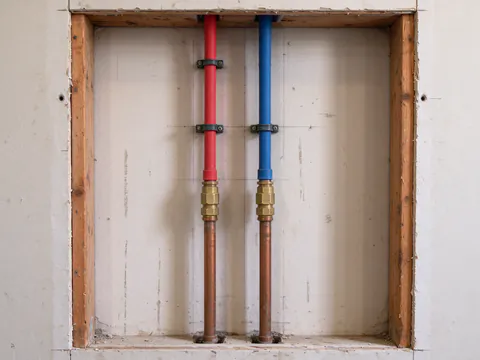
Material. PEX or copper both replace galvanized well. PEX has a smaller inside diameter than steel of the same nominal size, so the main is often run a size larger to deliver the flow the house needs. The PEX vs copper guide compares them.
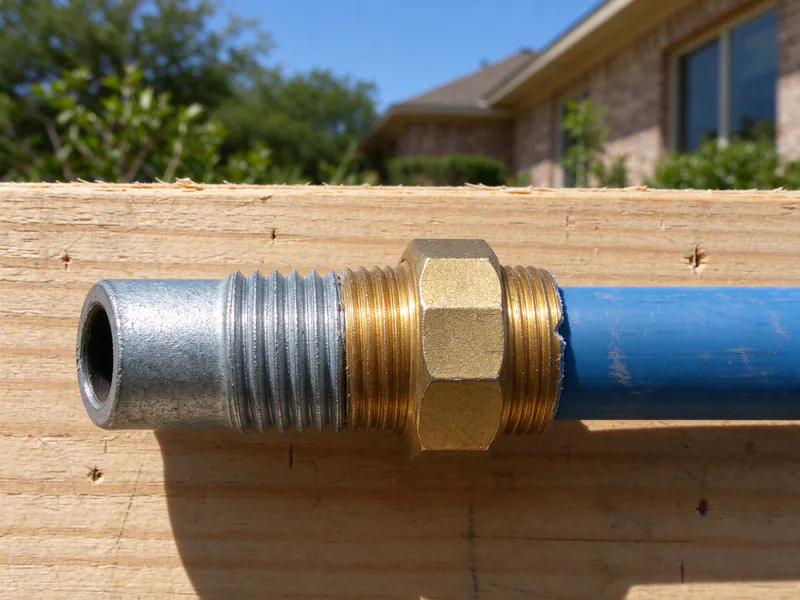
Transitions. Where new copper meets steel that stays, the two metals corrode each other unless a dielectric fitting separates them. Every transition uses a fitting listed for the two materials, which matters most on a partial job.
Old pipe. Steel that can be reached in the crawlspace or attic is cut out. Steel buried in walls or under a slab is capped and abandoned in place, because removing it would mean opening far more of the house.
Grounding. In older houses the metal water pipe often formed part of the electrical grounding path. Once it is replaced with PEX, that path is gone, and an electrician should check the grounding and bonding before the job closes. That is electrical work, separate from the plumbing.
Loosened scale. Cutting over to new pipe shakes scale loose from whatever steel remains upstream. A flush, then a check of aerators and faucet cartridges, finishes the job.
Houses built before 1978 can have lead-based paint on walls and trim, and disturbing it calls for lead-safe work practices. That is a cost line where it applies.
What galvanized pipe replacement costs
Galvanized replacement is priced as a whole-house or partial repipe, so there is no separate published range for it; the Austin repipe cost guide carries the whole-house ranges. What moves the price:
- house size and the number of bathrooms and fixture groups
- crawlspace access in pier-and-beam houses, or attic routes on slab houses
- plaster, tile and built-in cabinets that slow access
- transitions to any steel that stays, and where the job meets the service line
- lead-safe practices in houses built before 1978
- the patch scope for each opening
The repipe assessment helps decide whether it is time, and Is repiping worth it? weighs the cost against living with the steel a while longer.