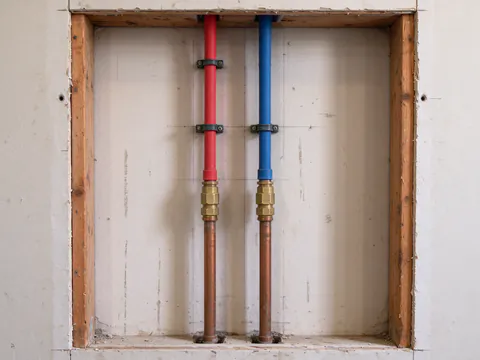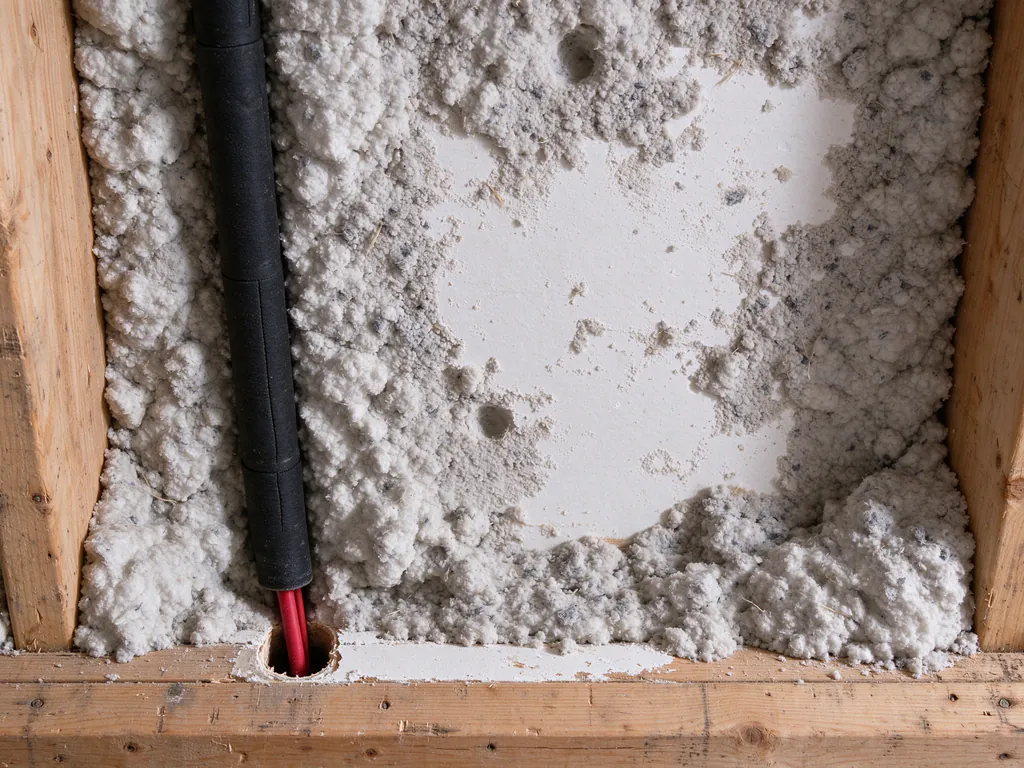
A slab leak reroute takes a leaking water line out of the concrete and replaces it with a new line run overhead. Grackle Repiping Austin offers and manages slab leak reroutes across Austin: the failed under-slab line is confirmed, capped at both ends and abandoned in place, and a new hot or cold line runs through the attic and down an interior wall to the fixtures it fed. The slab stays closed. The work is done by licensed and insured plumbing contractors, under a City permit pulled by a registered responsible master plumber.
A reroute is the middle option. A spot repair breaks the slab at the leak and fixes one section. A whole-house repipe replaces every supply line. Which one fits depends on what the testing shows about the rest of the pipe.
What happens on the first visit
The first visit checks the pipe material, reads static pressure at a hose bib, looks at attic or crawlspace access and finds where walls can open. For a reroute it adds one question that matters more than the rest: has the leak been proven, and on which line?
If it has, the visit maps the route. That means finding where the failed line starts, usually at the water heater or the main, which fixtures it feeds, and how a new line can reach them from the attic. A one-story slab house with open attic space is the simple case. A second story, a low roof pitch or a bathroom in the middle of the house changes the route and the number of openings.
Confirming the leak before anything is rerouted
Nothing gets rerouted until the leak is confirmed on a supply line. That step is managed as part of the job, and it is priced separately, because it has to happen whether the answer turns out to be a reroute, a spot repair or something else.
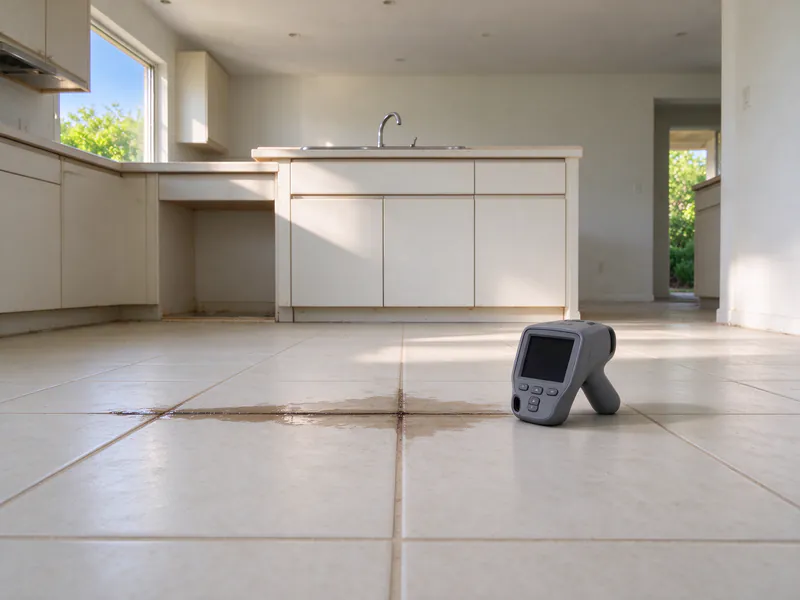
The signs that start the process are familiar: an Austin Water bill that jumps with no change in use, the meter’s leak indicator turning with every fixture off, a warm spot on a tile or wood floor, or the sound of running water when nothing is open. The slab leak signs guide covers each one. None of them proves which line is leaking.
Testing does. The usual sequence:
- Isolate the house. With every fixture off, the meter shows whether water is leaving the system at all.
- Split hot from cold. Closing the cold inlet to the water heater separates the hot side. If the meter stops, the leak is on the hot side.
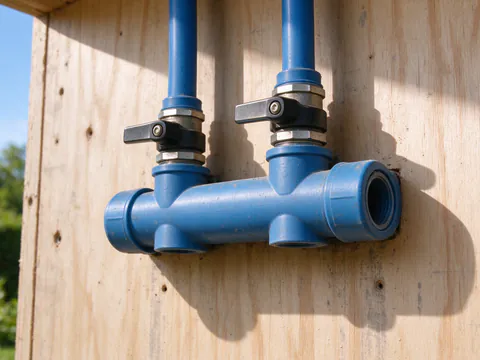
- Test each line. Where a house has a manifold or accessible branch valves, each line can be closed off and pressure tested on its own.
- Locate the spot. Acoustic listening and thermal imaging narrow the leak to an area of the floor. That matters for a spot repair. For a reroute, knowing which line failed matters more than the exact point.
Homeowners report paying for visits that never located a leak. Asking which of these tests will be run, and what the result will tell you, avoids that. A leak in a drain line under the slab is a different problem: Austin plumbing permits mention tunnelling under slabs 3,688 times in five years, and that tunnelling is for drain lines, which a supply reroute does not touch. The guide on drains explains the line between the two systems.
Spot repair, reroute or repipe
A spot repair makes sense when there is one leak, it has been pinned to a small area, the pipe on either side is sound, and the floor above it is easy to open. It fixes that one point. The rest of the line, and every other line in the slab, stays in the ground.
A reroute makes sense when one line has failed and the others test sound. It removes the failed line from service completely, not just the leaking point, and it keeps the slab and the floor intact. Austin permit descriptions say it plainly: “Abandon the leaking 3/4 hot water line in the foundation & reroute it overhead in the attic.”
A repipe makes sense when the testing finds more than one failed line, when this is the second or third slab leak, or when the pipe material is the real problem. Homeowners in Austin and Round Rock report hot-line slab leaks rerouted again and again over the years, and each round adds detection and repair costs that could have gone toward a whole-house repipe. A partial repipe sits in between when one wing or one set of fixtures is the problem.
The repair or reroute guide walks through the decision in more detail.
Why Austin slab leaks are rerouted overhead
Austin builds on slabs. Across five years of City plumbing permits, residential descriptions mention slab or under-slab work 950 times against 270 for pier-and-beam crawlspaces. In a slab house the original water lines run under or inside the concrete, and when one fails, there is no crawlspace to reach it from.
The City’s permit records show what happens next. From October 2021 to October 2026, Austin issued 149 permits to reroute water lines, and 80 of them mention the attic, overhead or ceiling. They cluster in the 1970s and 1980s slab subdivisions of South Austin, led by 78749 and 78745, and in Northwest Austin, led by 78731 and 78750.
Soil explains part of it, but not all. Much of south, central and east Austin sits on Houston Black clay, which the USDA describes as having high shrink-swell potential, with cracks half an inch to four inches wide a foot down in dry periods. A slab on that clay moves, and pipe in or under it moves too. Yet 78749, 78750 and 78731 sit largely on shallow limestone soils with little movement, and they reroute just as often. There, age, abrasion where pipe passes through concrete, and the expansion of a hot line every time it heats up are more likely causes than heaving ground. A good assessment says which explanation it is relying on rather than assuming one.
Running the new line through the attic
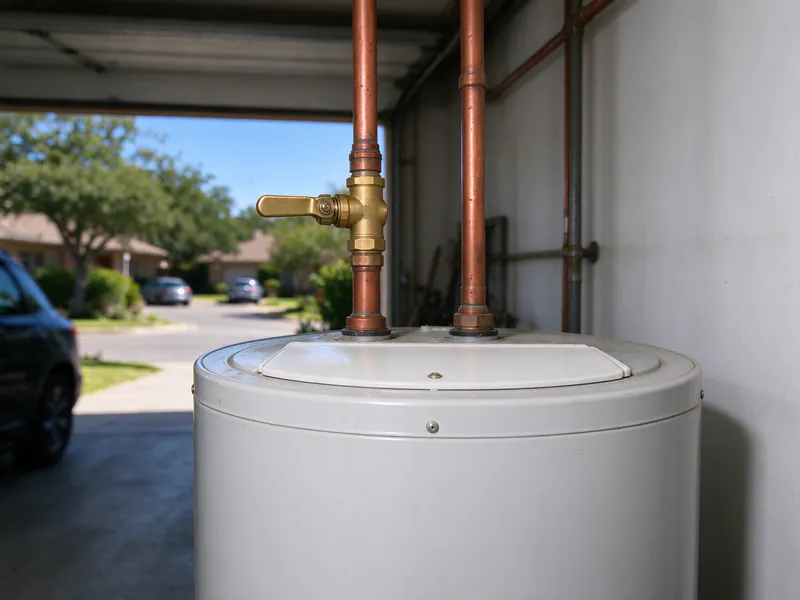
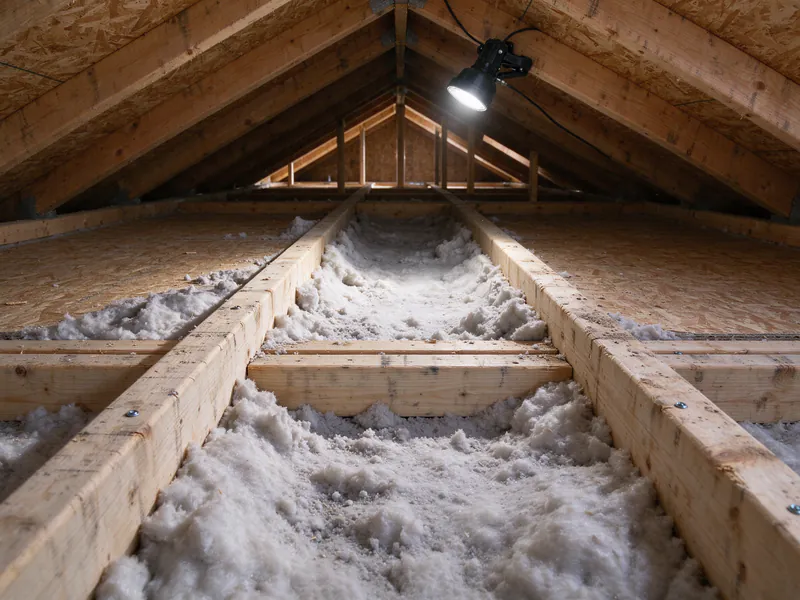
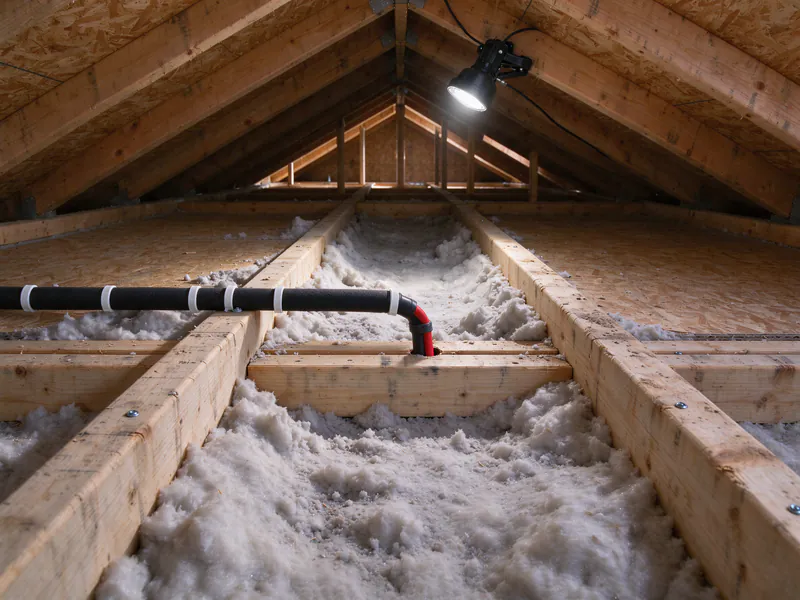
The new line usually starts at a sound connection point, such as the water heater outlet or a cold line where it rises out of the slab, and runs up into the attic. It crosses the ceiling framing and drops down an interior wall to the fixture or group of fixtures the old line fed. PEX suits the work, because it bends through framing in long runs with few joints; copper also works where the route suits it. The PEX repiping page covers the material.
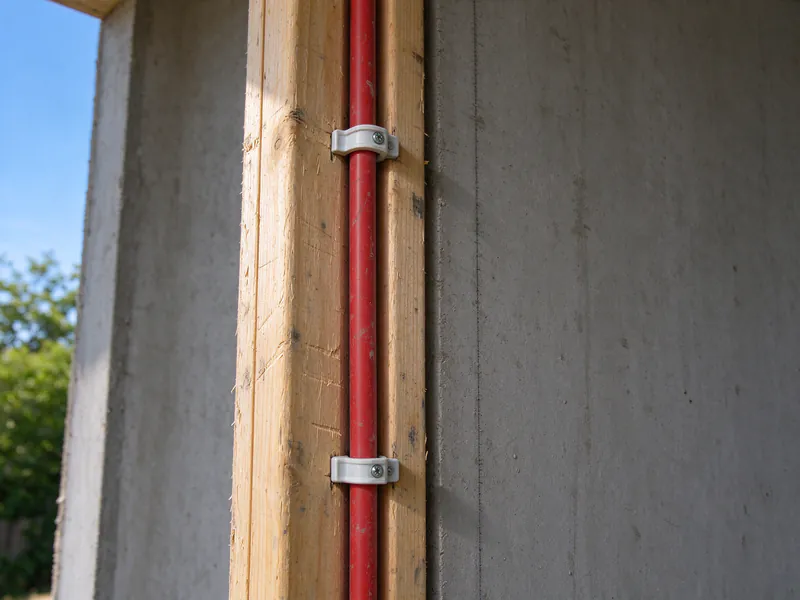
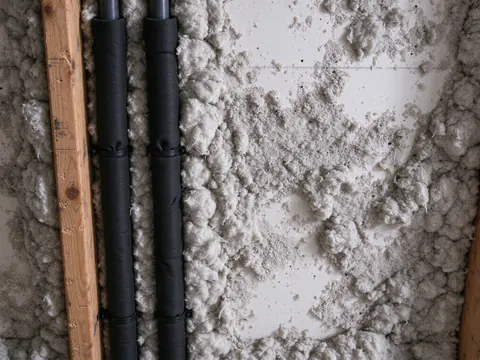
Austin’s code requires at least R-4 insulation, five-eighths of an inch thick or more, on water lines outside the building’s thermal envelope, and a vented attic is outside it. Insulation alone is not the whole answer. Lines laid low against the ceiling drywall, under the attic’s blown insulation, stay warmer in winter and cooler in summer than lines strung high under the roof deck. The line also needs support at the spacing the code and the manufacturer set, and protection from sunlight at vents and gable openings.
Freeze exposure varies across the city. Camp Mabry records sub-freezing temperatures about 12 days a year, while low-lying Austin-Bergstrom records about 33. The February 2021 storm brought ten straight days at or below freezing. One homeowner with a hot line rerouted through the attic reports it froze despite insulation, which is why routing and placement get as much attention as the insulation rating. The PEX in a Texas attic guide and the frozen pipes guide go further.
A rerouted hot line can be longer than the old path through the slab, so hot water may take a little longer to arrive at a far bathroom. Insulation on the new line limits heat loss. Where the wait was already long, the estimate can note whether a recirculation setup is worth discussing.
Permits and inspection
Austin’s plumbing code exempts leak repairs only when the work does not replace or rearrange pipes, valves or fixtures. A reroute does both, so it needs a City of Austin plumbing permit. Under Austin’s amendment 104.1.1, only a responsible master plumber licensed by the Texas State Board of Plumbing Examiners and registered with the City can pull it. The new line is pressure tested, then inspected before walls and ceilings close. If an inspection fails and has to be repeated, the City charges $83.85 per reinspection. The repipe permit guide covers the suburbs, which run their own offices and codes.
After the repair, Austin Water can adjust a bill that a leak drove up. It asks for the paid repair receipt describing the work, submitted within 90 days of the repair. Insurance is a separate question that depends on your policy; the slab leak insurance guide covers what to ask.
Not sure which line is leaking?
Confirming the leak comes first. The reroute is planned only once the failed line is proven.
What a slab leak reroute costs
A typical Austin-area range for a slab leak reroute is about $4,000 to $9,750, before leak detection. A single short run can cost less. What moves a house within that range:
- how far the new line has to travel from its connection point to the fixtures
- whether the attic has headroom and decking, or a low pitch that slows the route
- one story or two, and how many walls the drops have to pass through
- how many fixtures the failed line fed, and whether both hot and cold need rerouting
- the patch scope for each opening
- a pressure regulator and expansion tank, if static pressure tops 65 psi
The slab leak reroute cost guide breaks these down, and the cost estimator gives a starting range for your house.
When a reroute turns into a repipe
A reroute is the right fix for one failed line. It stops being the right fix when the testing shows a second line losing pressure, when the house has a material with a known failure pattern such as polybutylene or galvanized steel, or when the leaks have started to come one after another. At that point, the money spent chasing leaks one line at a time is better spent replacing all of them once. The repipe assessment helps sort out which situation you are in, and the estimate for a reroute will say plainly if the testing points the other way.