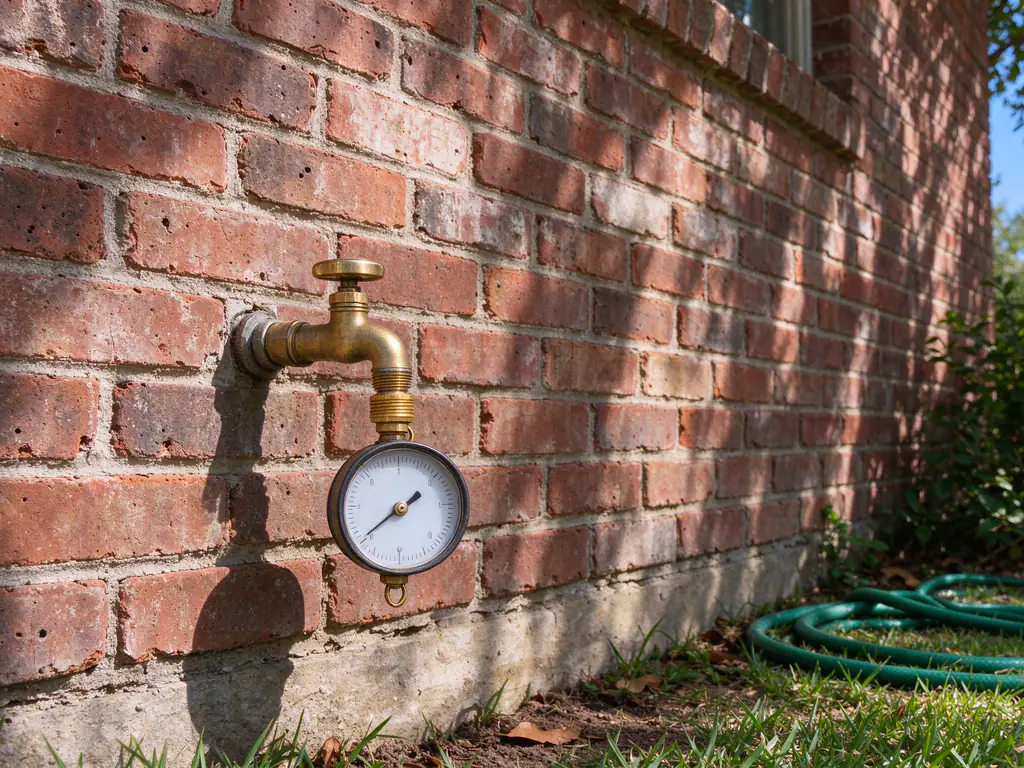
Austin Water’s Oltorf at Travis Heights Pressure Zone project will connect the Oltorf corridor near Travis Heights to stronger pressure areas, forming a new South Reduced Pressure Zone, and will install pressure reducing valves at certain junctures and on some properties, with thermal expansion tanks where needed. If your property is in it, read your static pressure, note your existing regulator and water heater, and know your shutoff before the work; check pressure, flow and the water heater relief valve after. Grackle Repiping Austin offers and manages repiping and pressure regulator work on the owner’s side of the meter; this post explains what to look at.
What Austin Water says the project does
According to Austin Water’s project page, the Oltorf corridor near Travis Heights sits in the Central Pressure Zone. The project connects it to stronger pressure areas to form a new South Reduced Pressure Zone. To keep pressure at homes in range, Austin Water will install pressure reducing valves at certain points in the system and on some properties, and where necessary will provide and install thermal expansion tanks at no charge. Owners of affected properties receive a notice and a right-of-entry form. Austin Water describes the construction as running about 18 months.
The project page is the source for whether a particular address is included and when its work happens. Read the notice closely, return the form if asked, and call the number on the notice with questions about the utility’s part.
Why a regulator brings an expansion tank with it
A pressure regulator generally stops water from flowing back toward the street. Without one, when the water heater warms a full tank, the expanding water pushes back into the main and pressure in the house barely moves. With one, the house becomes a closed system: the expanding water has nowhere to go, pressure climbs, and the water heater’s temperature and pressure relief valve can start to drip or discharge. The expansion tank gives that water room.
Austin’s own plumbing code reaches the same answer for private plumbing. Amendment 608.2 to the 2024 Uniform Plumbing Code requires a regulator with a strainer when static pressure exceeds 65 psi, set to 65 psi or less, with an NSF 61 expansion tank downstream. So a regulator and a tank belong together whether the utility installs them or a plumber does.
Before the work: a short checklist
- Read static pressure. A gauge from a hardware store threads onto a hose bib. With every fixture off, the reading is static pressure. Write it down with the date.
- Look for an existing regulator. It is usually a bell-shaped brass valve on the line near where it enters the house, sometimes near the meter or in the garage. Note whether you have one.
- Look at the water heater. Note whether there is already an expansion tank on the cold line, and whether the relief valve or its drain line shows signs of dripping.
- Find the customer shutoff. Austin Water says the owner’s valve is typically on your side of the meter, at the meter box. Turn it once to be sure it works.
- Note your flow. Run a shower and a kitchen faucet and notice how they feel, so you can compare after.
Those notes make it far easier to tell later whether a change came from the project or from something in the house.
After the work: what to check
- Static pressure again. Compare it with your earlier reading. Within the code limit of 65 psi or below is the target for the house.
- Two regulators in a row. If the house already had its own regulator and the project added another, the lower setting of the two controls the pressure. A reading that has dropped sharply may mean the private regulator needs adjusting or is no longer needed. Homeowners report asking the City what to do after a regulator was removed or changed, so keep the notice and any paperwork from the work.
- The water heater relief valve. A valve that starts dripping after the work points at thermal expansion. Check that a tank was installed if your property was supposed to get one.
- Flow at fixtures. Lower pressure can make weak fixtures more noticeable. A single weak shower usually points at that fixture’s cartridge or aerator; weak flow everywhere, with a normal pressure reading, points at the pipe. The low water pressure guide walks through that sorting.
Pressure changed and flow got worse?
A walk-through reads the pressure, checks the regulator and tank, and looks at the pipe before anyone talks about repiping.
When the pipe is the real limit
Lower street pressure exposes pipe that had been coasting on high pressure. Part of 78704 is old housing: about 13% of its homes were built before 1960. Austin Water’s service line inventory flags 158 active residential meters in 78704 as galvanized requiring replacement, more than any other ZIP. That flag covers the yard line, not the pipe inside the house, but in an older house galvanized steel can continue inside the walls, and scaled galvanized pipe passes much less water than it was sized for. The galvanized pipe replacement page and the pipe identification guide explain how to tell.
If flow fell noticeably after the project and the gauge reads within range, the question becomes whether the pipe or a section of it should be replaced. A partial repipe may cover one restricted section; a whole-house repipe is the answer when the material itself is the problem. The is repiping worth it guide weighs those choices.
Planning a repipe in the project area
If you were already planning a repipe or a water line replacement, it makes sense to coordinate with the project. A pressure reading taken before the zone change may not be the pressure the house lives with afterward, and the regulator and expansion tank question may already be answered by the utility’s work. Any work on the owner’s side of the meter in Austin still needs a plumbing permit pulled by a City-registered responsible master plumber; the repipe permit guide explains the steps.