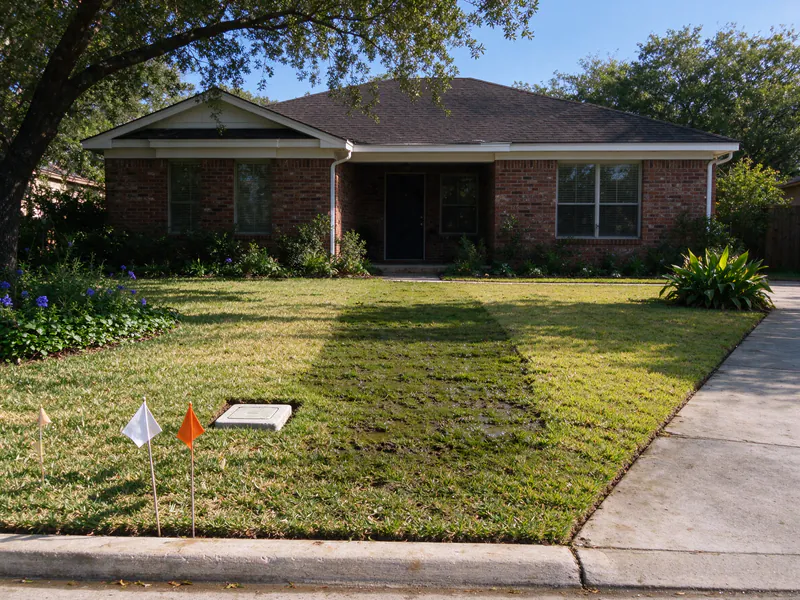
Grackle Repiping Austin replaces the buried water line that runs from the meter near the curb to the house. Water line replacement in Austin starts with a boundary: Austin Water maintains the main and the service line up to the meter, and the property owner is responsible for everything past it, including the customer cut-off valve and the pipe all the way into the building. This page is about that private stretch, which the trade calls the yard line. The supply pipe inside the walls is a separate job, covered on the whole-house repiping page.
Where your water line starts and Austin Water’s ends
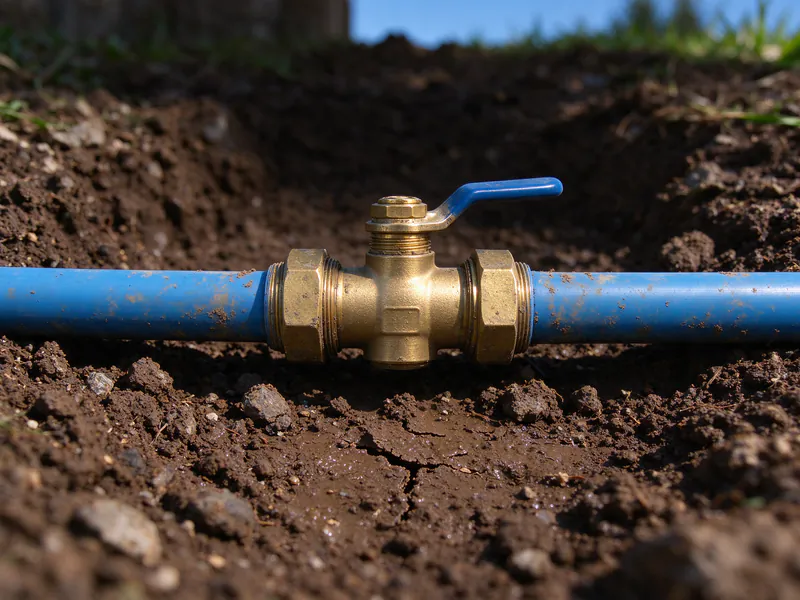
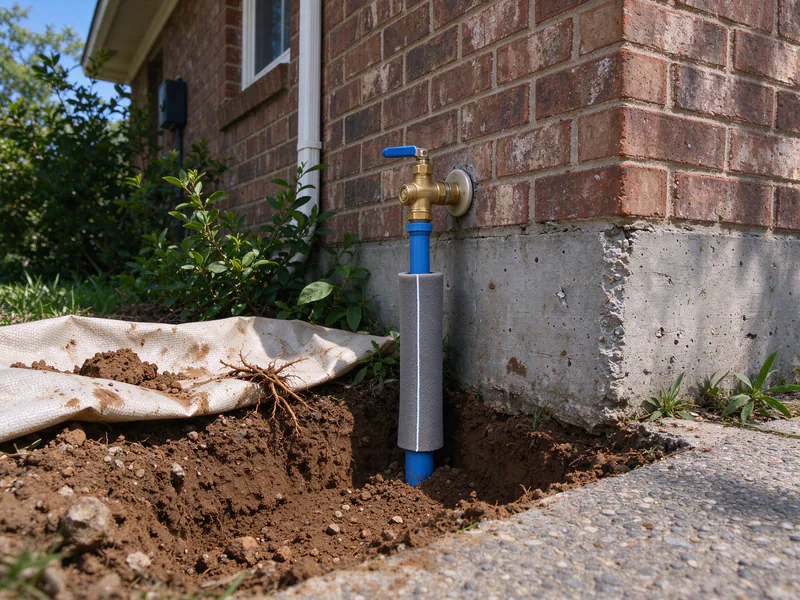
Austin Water’s own diagram puts the meter in a ground-level box near the sidewalk, just before the property line. The pipe from the main under the street to that meter is public. Just past the meter, on the private side, sits a customer cut-off valve, and from there the yard line runs underground to the point where plumbing enters the house, typically at a riser beside a hose bib, a garage wall or the kitchen side of the house.
That split decides who you call. A leak in the meter box, or between the box and the street, is Austin Water’s, and the utility takes leak reports at 512-972-1000. A soggy strip of lawn between the box and the house, a hiss at the riser, or a meter that keeps moving with every fixture closed points to the yard line, which is the owner’s to repair or replace.
Austin’s plumbing code adds one detail at the meter. Amendment 606.2.1 keeps a new full-way valve on the meter discharge out of a City meter box unless Austin Water consents in writing, so a replacement yard line normally ends at an accessible customer valve just outside the box. Homeowners report older houses with a buried, seized or missing owner-side shutoff, and a yard-line job is the natural time to put one where you can reach it in a hurry.
Signs the yard line, not the house, is leaking
- a wet or unusually green strip of lawn on the line between the meter and the house, or water standing in the meter box after dry weather
- a water bill that jumps with no change in use; homeowners report a surprise Austin Water bill as the first sign of a hidden leak
- the meter’s leak indicator moving while every faucet, toilet and irrigation zone is off
- weak pressure everywhere at once, including the outdoor hose bibs
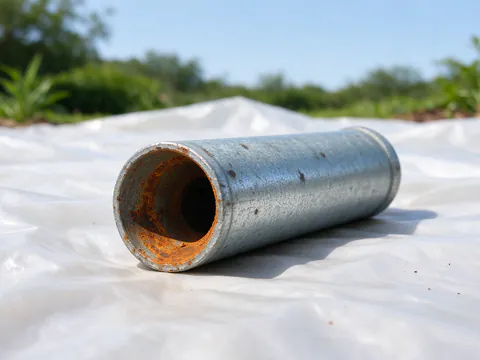
- gray polybutylene or rusted galvanized pipe where the line rises out of the ground
None of these proves a yard-line failure on its own. A running toilet also spins a meter, and whole-house low pressure can come from a failing pressure regulator or a partly closed valve. The low water pressure guide explains how those are told apart. A meter reading with everything off, then the same test with the house shut off at its main valve, separates a leak in the yard from a leak inside before anyone digs. If the leak turns out to be under the slab, the job becomes a slab leak reroute instead.
Check Austin Water’s programs before you pay
Austin Water reports no lead service lines in its system, but it flags customer-side lines with galvanized steel between the meter and the building and an unclear history as “galvanized requiring replacement.” About 770 lines carry that flag; the utility’s inventory map shows 738 active residential meters, and four ZIP codes hold more than half of them: 78704 in South Central Austin, 78757 and 78751 in North Central Austin, and 78702 in East Austin. Austin Water is replacing these lines proactively. Owners can sign up for the replacement, or replace the line themselves and request reimbursement of eligible expenses. The program runs from the meter to five feet from where the line enters the building, so the last five feet and the house connection remain the owner’s work. The Austin Water lead page has the inventory map and sign-up.
Austin Water also replaces polybutylene service lines, but only on the public side: the small lines that connect water mains to customer meters, with priority where static pressure tops 105 psi. A house whose utility-side line was replaced can still have its original private yard line, whatever it is made of.
Outside Austin, no comparable free program turned up for Round Rock, Cedar Park, Leander or Georgetown. There the yard line is simply the owner’s.
How a meter-to-house replacement runs
Locating. Texas law defines excavation as using powered equipment, including trenchers and boring machines, to disturb soil 16 inches deep or more. The excavator has to notify the 811 one-call center at least 48 hours before digging, not counting weekends and legal holidays (Texas Utilities Code chapter 251). Utility members then mark their gas, power and communication lines. They do not mark lines that serve only the owner and sit only on the owner’s property, so the old yard line, irrigation pipe and any private power run to a shed or gate are traced separately.
Choosing the route. The old trench is the obvious path but not always the best one. A new line can swing around a driveway, a mature tree or a pool deck. Austin plumbing permits that state a length put the typical yard line at about 40 feet, with the middle half between 30 and 50 feet.
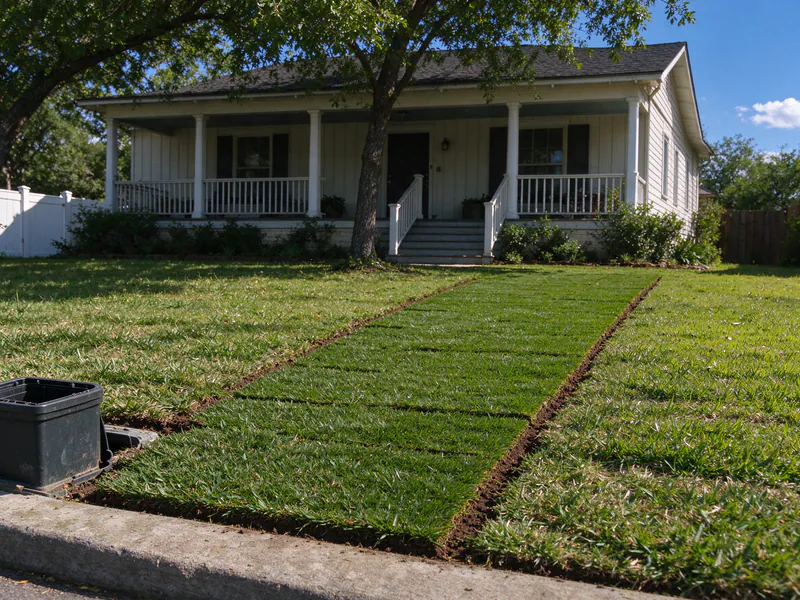
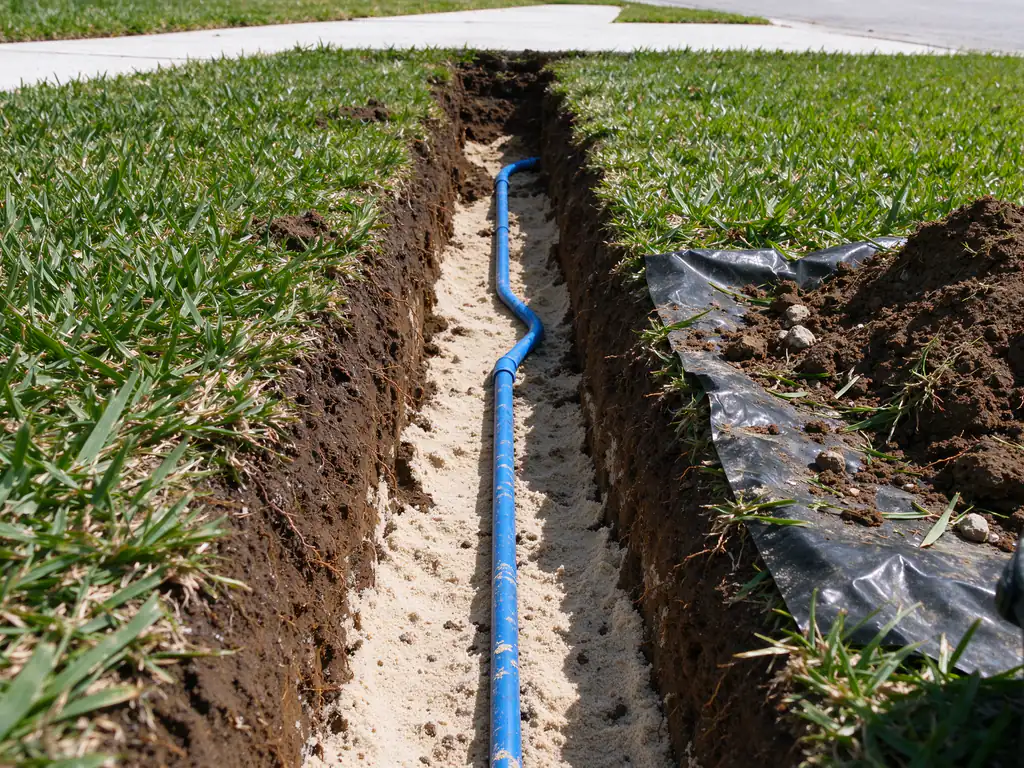
Trench or bore. Open trench is the plain method: dig, bed the pipe, test, backfill. Where the line has to cross under a driveway, a walk or landscaping worth keeping, a horizontal bore or a pulled line goes underneath, with a small pit at each end. Trenchless work usually costs more per foot, but it can cost less overall when the alternative is breaking and repouring concrete.
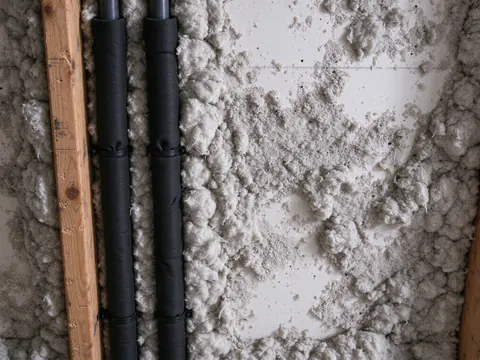
The tie-ins. At the meter end, the new line connects to the outlet side of the meter with a customer valve outside the City box. At the house, it joins the building supply. Where static pressure tops 65 psi, Austin’s amendment 608.2 calls for a pressure regulator with a strainer, set to 65 psi or less, with an expansion tank downstream; the regulator sits above ground or in a vault and is protected from freezing. Any part of the new line exposed outside the building’s thermal envelope, such as the riser at the wall, needs insulation rated at least R-4 and at least five-eighths of an inch thick. The pressure regulator guide covers that rule in detail.
Testing and inspection. The new line is pressure tested and inspected while the trench is still open. Then it is backfilled, compacted and restored to the scope written in the estimate.
Clay, limestone and the trench
Austin’s soils change the dig. USDA soil data at repipe permit sites in 78703, 78744 and 78745 lands largely on Houston Black and Heiden clays, which the USDA describes as high shrink-swell, opening cracks half an inch to four inches wide a foot down during dry spells. Clay digs easily but keeps moving, which works on rigid pipe and old fittings and makes good bedding and a forgiving pipe material worth the trouble. The west side is the opposite: Eckrant and Brackett soils at permit sites in 78731, 78746, 78749, 78750 and 78759 sit as little as 4 to 20 inches over limestone, so a trench can hit rock quickly and need rock trenching or a different route. Homes in Northwest Austin and South Austin show both ends of that range.
Permits for a yard line in Austin and the suburbs
The City of Austin treats a yard-line replacement as permitted plumbing work, and under amendment 104.1.1 only a Texas responsible master plumber registered with the City can pull the permit. The City’s open permit data shows 696 residential plumbing permits describing a water service line, yard line or meter-to-house run from October 2021 to October 2026. The suburbs run their own offices: Round Rock requires a permit to repair or replace plumbing and lists a standalone residential plumbing permit at $50. In Georgetown, Cedar Park, Kyle and areas served by a MUD or water supply corporation, the boundary at the meter and the permit route are confirmed per address and utility. For utilities regulated by the Public Utility Commission of Texas, state rules make the customer responsible for the line from the meter discharge to the house. The repipe permit guide covers who issues what.
How much water line replacement costs in Austin
A typical Austin-area range for a meter-to-house run is about $1,500 to $5,000. Long runs, boring under a driveway and restoring hardscape or landscaping push it higher. For open-trench work, a national budgeting range is about $50 to $185 per foot before restoration; it is a sense of scale, not a way to build a quote by multiplying out the footage.
What moves a particular yard:
- the length of the run and the depth of the trench
- open trench or bore, and how many driveways, walks or beds the line crosses
- clay that digs easily or limestone that needs rock trenching
- the pipe material
- a new customer valve, and a regulator and expansion tank at the house where pressure tops 65 psi
- the lawn, irrigation, bed and concrete restoration the estimate includes
- the City plumbing permit and inspection
Not sure whether the leak is in the yard or the house?
The first visit checks the meter, the shutoffs, the pipe material and the pressure before anyone picks a trench line.
Yard line, repipe, or both
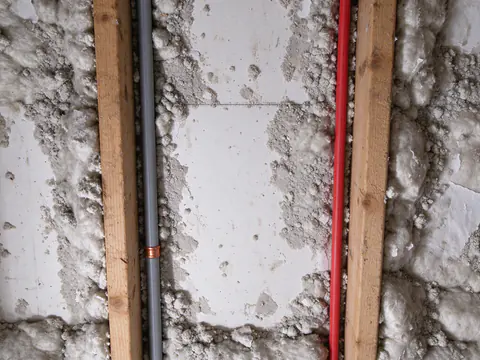
The yard line and the house piping are two systems that meet at the wall. A new yard line does nothing for scaled galvanized pipe inside the walls, and a whole-house repipe does nothing for a leak in the front lawn. Some Austin permits bundle the two, a new main water service from the city meter to the home plus a PEX repipe, because both share one shutdown, one permit trip and one pressure regulator decision.
Doing both at once makes sense when both are failing: galvanized pipe inside a house whose yard line is also galvanized, or a house with polybutylene indoors and out. In a home on Austin Water’s galvanized list, sequence the work instead: let the program replace the yard line, then plan the galvanized pipe replacement inside and the last five feet to meet it, rather than paying for the stretch the utility covers. A gray plastic line at the riser is a cue to read the polybutylene pipe replacement page as well.
Exposed risers deserve attention after any freeze. A yard line that comes out of the ground on a north wall, with little or no insulation, sits in the same cold that split pipe across Austin in February 2021; the frozen pipes guide covers protecting it.
This work is the drinking-water line only. The sewer yard line that carries waste to the street is a different pipe with different failures, and the guide on drains explains where that boundary sits. The repipe cost guide covers the price of the piping inside the house.