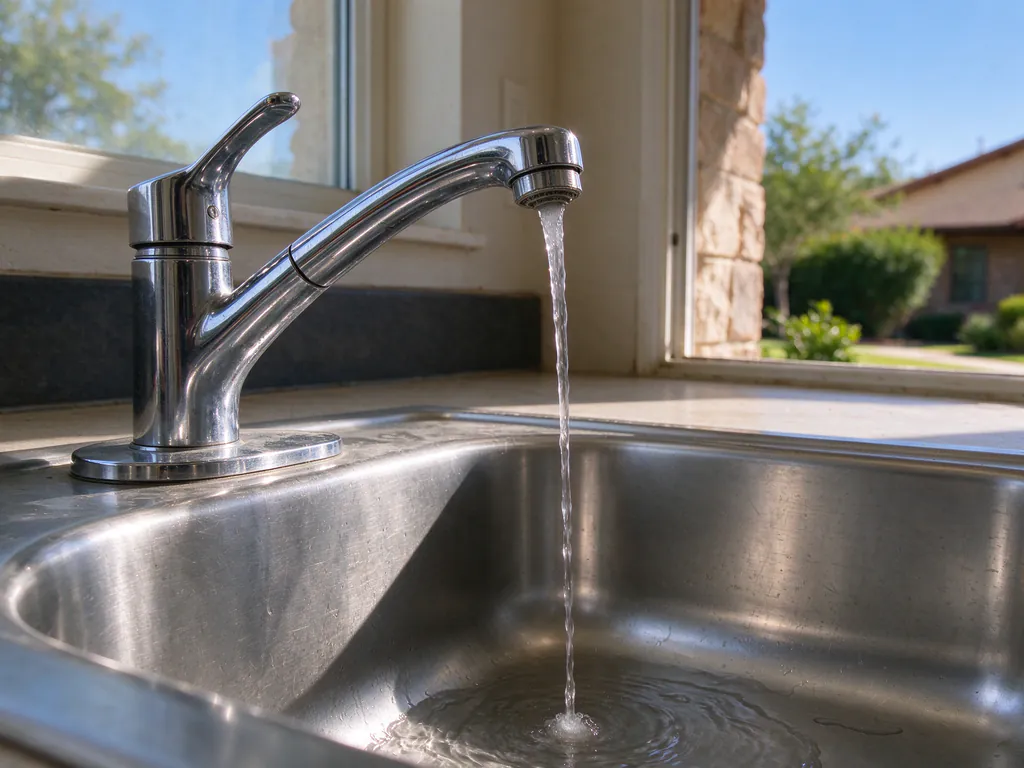
Low water pressure in an Austin house usually comes from one of four places: the pressure arriving from the street, a pressure regulator that is failing, supply pipe that has narrowed inside, or a clogged fixture. Two readings, static pressure with everything off and flowing pressure with water running, separate them. Grackle Repiping Austin reads both on its first visit before it recommends any pipe work, because a repipe only fixes the third cause.
Static and flowing pressure: the two numbers that matter
Static pressure is what a gauge reads on a hose bib with every faucet, toilet and irrigation zone off. It shows what the utility and the regulator deliver to the house. Flowing pressure, or residual pressure, is what the same gauge reads while one or two fixtures run. The drop between the two shows how much the pipe, valves and fittings are holding the water back.
A gauge that screws onto a hose bib costs little at a hardware store. Read it on the bib closest to the meter, then open the kitchen faucet and a tub spout and read it again.
| What you see | What it points to |
|---|---|
| Static pressure low, below about 40 psi | Supply pressure, a regulator set or failing low, or a partly closed main valve |
| Static pressure normal, flowing pressure falls hard | Restriction inside the house: scaled pipe, an undersized main, a clogged regulator strainer or a half-closed valve |
| Static pressure high, above 65 psi | A missing or failed regulator; Austin’s code requires one above 65 psi |
| Both normal, one fixture weak | That fixture’s aerator, cartridge or angle stop |
| Hot side weak, cold side fine | Water heater connections, the heater’s inlet or sediment, or the hot-side piping |
A homeowner on a home-improvement forum described the classic galvanized pattern: 82 psi static that fell to 12 psi with two fixtures open. Pressure that looks fine at rest and disappears in use is a pipe problem, not a utility one.
What the utility delivers in Austin
Austin Water runs its system as a set of pressure zones, and the pressure at a given house depends on its zone and how high the house sits within it. Its former customer page on water pressure is no longer online, and there is no simple public map to look an address up, so a gauge reading is the dependable number.
Permit data points the other way in parts of the city. Over five years of City plumbing permits, regulator work clusters on the hilly west and southwest side, in ZIP codes such as 78739, 78730, 78749 and 78731, which is the opposite problem: pressure high enough to need reducing. Austin Water is also rebuilding pressure along the Oltorf corridor near Travis Heights into a new reduced pressure zone; the Oltorf pressure zone post covers what that means for owners there.
Round Rock, Cedar Park and Kyle deliver much harder water than Austin Water’s lime-softened supply, and hard water leaves scale in aerators and valves sooner. The Austin hard water guide compares the utilities.
When the pressure regulator is the problem
A pressure regulator, or pressure-reducing valve, sits where the service line enters the house and steps street pressure down. Austin’s amendment to the 2024 Uniform Plumbing Code requires one with a strainer whenever static pressure exceeds 65 psi, set to 65 psi or less.
Regulators fail in both directions. A worn diaphragm or seat can let pressure creep up to whatever the street delivers. A clogged strainer, a stuck spring or a valve set too low starves the house instead. Homeowners in Austin report regulators failing around ten years in, regulators buried in the yard with no box, and meter work that disturbed the valve. Two clues point to the regulator rather than the pipe: low flow everywhere at once that started suddenly, and a static reading that drifts when you check it at different times of day.
Replacing or resetting a regulator is a far smaller job than a repipe. The pressure regulator guide explains Austin’s rule, the expansion tank that goes with it and signs a regulator is failing.
When the pipe itself is the restriction
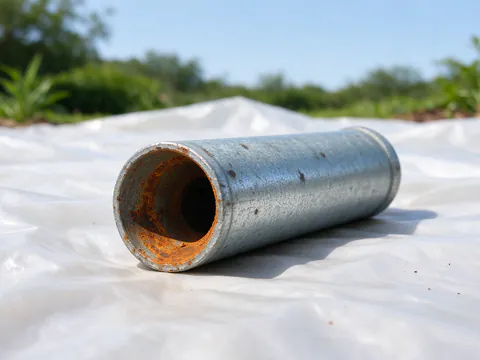
Galvanized steel pipe, common in Austin houses built in the 1940s through the 1960s, rusts from the inside once its zinc coating wears through. The scale narrows the bore until a three-quarter-inch line passes a fraction of the water it was sized for, and the outside of the pipe can look fine while it happens. The restriction is worst at threaded joints and in small branch lines, so fixtures farthest from the meter suffer first. In Austin, galvanized pipe is named in plumbing permit descriptions most often in 78757, 78703, 78702 and 78704.
Other pipe causes are less common: a main line too small for the fixtures it now serves after an addition, a corroded or crushed section of yard line between the meter and the house, or a mix of old and new pipe where a narrow old section chokes the new one. A water line replacement handles the yard line; a galvanized pipe replacement handles the scaled pipe inside. The pipe identification guide shows how to tell what you have.
Pressure low and not sure why?
A first visit reads static and flowing pressure and checks the regulator and pipe before any scope is written.
Checks you can do before calling anyone
- Test more than one fixture. If only one shower is weak, unscrew its aerator or showerhead and look for grit or scale. A single weak faucet is a fixture problem.
- Compare hot and cold. Weak hot water alone points toward the water heater or its connections.
- Check the main shutoff. A valve left partly closed after a repair costs nothing to fix. Know where the customer valve at the meter box is, too.
- Read the gauge twice. Static at rest, then flowing with two fixtures open. Write both down.
- Think about timing. Pressure that dropped right after street work or a meter swap points to debris or a disturbed regulator. Pressure that faded over years points to the pipe.
When a repipe actually fixes low pressure
A repipe restores pressure when the pipe is the restriction: scaled galvanized steel, an undersized main or a patchwork of narrow old sections. New pipe sized for the house, and sized under Austin’s code on 80 percent of the reduced pressure where a regulator is installed, carries the flow the fixtures need. It does nothing for a failing regulator, a clogged aerator or low pressure from the utility.
Where the pipe is the cause, the choice is between replacing the worst section and replacing all of it. The partial repiping page explains when one section is enough, the whole-house repiping page covers the full job, and the guide on whether repiping is worth it weighs the two.