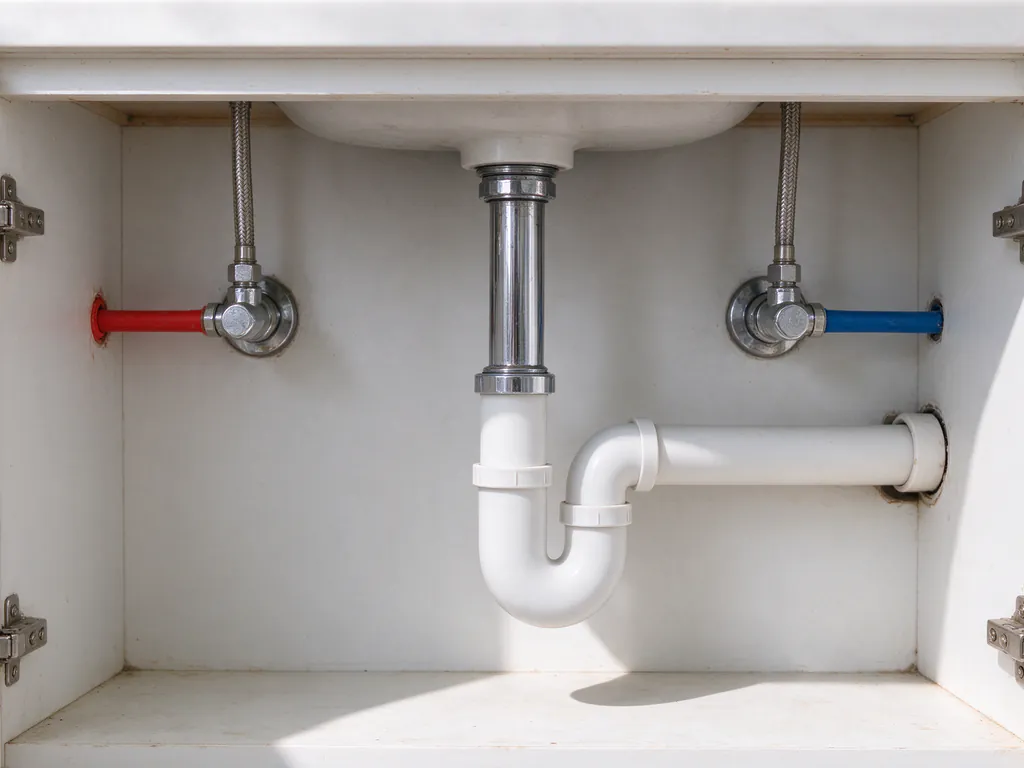
No. Repiping replaces the water supply pipe: the pressurized hot and cold lines that run from the main shutoff to every faucet, shower, toilet and appliance. Drain, waste and vent pipes and the sewer line are a separate gravity system, and a repipe leaves them alone. Grackle Repiping Austin works on supply pipe only, both inside the house and on the buried line from the meter, and drain and sewer work is not offered here.
Two systems in every house
| Water supply | Drain, waste and vent | |
|---|---|---|
| What it carries | Clean water in, under pressure | Used water and waste out, by gravity |
| Typical size | Half-inch to one-inch lines | One-and-a-half inches and up |
| Common materials | Galvanized steel, copper, polybutylene, CPVC, PEX | Cast iron, PVC, ABS |
| How it fails | Pinholes, corrosion, scale, fitting failure, freezing | Cracks, sags, root intrusion, clogs, separated joints |
| How a leak behaves | Leaks constantly, whether or not a fixture runs | Leaks only when water goes down the drain |
| How it is tested | Pressure test, meter test | Camera inspection, drain or hydrostatic test |
| Who handles it | Repiping | Drain and sewer work |
Because the two systems fail differently, they are diagnosed and priced differently. A repipe estimate that does not mention drains is not leaving something out; drains are outside its scope. The what is repiping guide covers the supply side in full.
Telling a supply slab leak from a drain slab leak
Both can sit under an Austin slab, and both can show up as a damp floor, a musty smell or a high bill. The meter separates them.
- Shut off every fixture, including the ice maker, irrigation and the water heater fill if you can.
- Read the water meter at the meter box and note the dial or display.
- Wait without using water for an hour or two, then read it again.
If the meter moved, water is escaping from the pressurized side: a supply line, a toilet valve or a fixture. If it did not, but the floor stays wet or the smell comes back after showers and laundry, a drain line is the more likely source. A warm spot on the floor points to a hot supply line, since drains do not carry hot water under pressure. The slab leak signs guide covers the other clues.
Austin’s permit records show how differently the two are fixed. Over five years, City plumbing permit descriptions mention tunneling, the method used to reach and replace drain pipe under a slab, 3,688 times, with the most in 78723, 78757, 78745 and 78731. Supply lines under a slab have another option: they can be abandoned and run overhead. City permits describe that in plain words, such as “Abandon the leaking 3/4 hot water line in the foundation & reroute it overhead in the attic.” That option only exists for supply pipe: a drain has to slope downhill to the sewer, so it cannot be moved into the attic. The slab leak reroute page explains the supply-side fix.
Insurance treats the two the same way
Homeowners report the same answer from insurers whether the failed pipe under the slab was a drain or a supply line: the policy may pay to tear out what was in the way and for the resulting damage, but not to repair the pipe itself. The Texas Department of Insurance explains that most policies cover sudden and accidental water damage and usually not gradual leaks. Separate leaks in separate areas can mean separate claims. The slab leak insurance guide covers coverage questions.
Not sure which line is leaking?
A first visit reads the meter and pressure, so you know whether the problem is supply pipe before anyone opens a floor.
Interior repipe versus the underground water line
The supply side has two parts, and they are separate jobs.
Interior repiping replaces the pipe inside the house, from the main shutoff to the fixtures. In a slab house the new lines usually run through the attic and down the walls. That is a whole-house repipe or a partial repipe.
The water service line, which Austin Water calls the yard line on the private side, is the buried pipe from the meter to the house. Austin Water owns the main, the service line to the meter and the meter; the property owner owns everything on the house side of it. Replacing that line is trench or boring work in the yard, priced and permitted on its own. A typical Austin-area range for a meter-to-house run is about $1,500 to $5,000, and long runs, boring under drives and restoration push it higher. The water line replacement page covers it.
The two can be done together when both are failing, and a permit can bundle them. In houses where Austin Water has flagged the yard line as galvanized requiring replacement, the utility is replacing those lines from the meter to near the house, so the interior repipe should be timed with that work rather than priced to include it.
Lead service lines
Austin Water reports that its field investigations found no lead service lines in its system. It does flag older galvanized service lines for replacement on the customer side of the meter, concentrated in 78704, 78757, 78702 and 78751. Lead in private plumbing was banned in Austin in the mid-1960s, and homes built before 1986 were long considered most at risk from lead solder and fittings. Austin Water’s lead page has the inventory and the sign-up for the galvanized line program. Lead service line replacement is not a service offered here.
What to ask before signing
- Which system the estimate covers: supply, drain or both
- Whether the main shutoff, the water heater connections and the hose bibs are included
- Whether the yard line from the meter is part of the job or a separate one
- What happens to old supply lines in the slab: capped and abandoned, or removed
The Austin repipe cost guide shows how each of those lines changes the price.