Two different reasons to replace supply pipe meet in East Austin. One is age: ZIP code 78722 has some of the oldest housing in Austin, with more than half its homes built before 1960. The other is ground: parts of 78702 and 78721 sit on Houston Black and Bergstrom clays, which shrink and swell under slabs. A house here can have both problems at once, and the plan has to account for that.
Grackle Repiping Austin offers and manages repiping and slab-leak reroutes in Holly, Govalle, Rosewood, Cherrywood, French Place and Windsor Park, carried out by licensed and insured plumbing contractors with permits pulled by a City-registered responsible master plumber. The walk-through on an East Austin house checks for both problems before any scope is set.
Four ZIP codes, four different starting points
East Austin is not one housing story, and the four ZIP codes start from different places. The numbers below come from the Census Bureau’s American Community Survey, Austin Water’s service line inventory and City of Austin plumbing permits issued from October 2021 to October 2026.
| 78702 | 78721 | 78722 | 78723 | |
|---|---|---|---|---|
| Homes built before 1960 | 27.7% | 20.0% | 55.9% | 12.0% |
| Homes built before 1970 | 33.6% | 41.5% | 62.4% | 36.8% |
| Median year built | 2004 | 1985 | 1958 | 1983 |
| Flagged galvanized service lines | 90 | 12 | 32 | 18 |
| Water repipe and reroute permits | 12 | 6 | 4 | 18 |
78722, around Cherrywood and French Place, is the oldest. 78702, from Holly and Rosewood to Chestnut, has a large stock of prewar and postwar houses and a median year of 2004, which says how much new building has gone up beside them. 78721 sits between, with four in ten homes built before 1970, and 78723, which takes in Windsor Park, led East Austin in repipe and reroute permits.
Galvanized pipe in the older houses
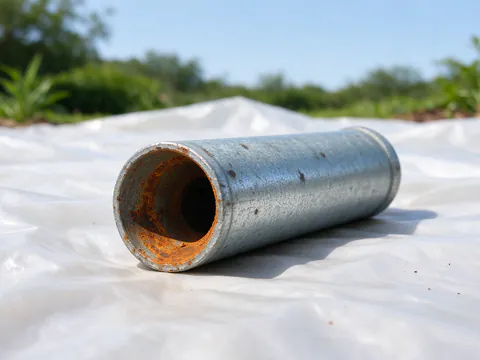
Houses from the 1940s through the 1960s were commonly plumbed with galvanized steel. Where it has not been replaced, it scales from the inside until the smaller branches to showers and sinks pass far less water than they were sized for. Brown water after a shutoff and a toilet that takes a long time to refill are the usual first signs. In City plumbing permit descriptions, galvanized pipe is named 10 times in 78702, third in Austin after 78757 and 78703, and 6 times in 78723.
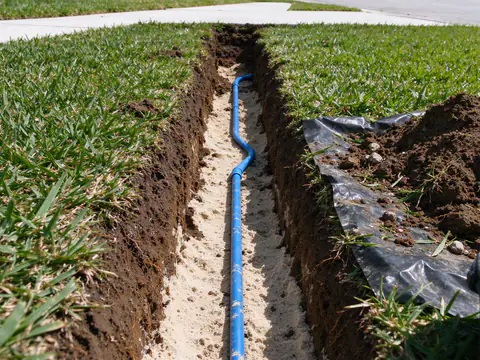
The flagged service lines tell the same story from the yard. Austin Water’s inventory counts 152 meters in these four ZIP codes as galvanized requiring replacement, and the utility is replacing them from the meter to about five feet from the house. That work stops outside. If the pipe inside is galvanized too, a galvanized pipe replacement or a whole-house repipe is still the owner’s job, and it goes best when it is timed with the yard line so loosened scale does not clog new valves. The water line replacement page shows where the utility’s work ends.
Clay under some slabs, not all
The clay story in East Austin is patchy. Houston Black, the classic Blackland Prairie clay, cracks half an inch to four inches wide at a foot deep in dry periods, according to the federal soil survey, and swells again when it gets wet. A slab on that soil moves with the seasons, and copper or steel supply pipe where it passes through or under the slab takes that stress. Bergstrom and Houston Black are the main soils mapped at repipe permit locations in 78702 and 78721. Even so, 7 of the 10 permit locations in 78702 rate low for shrink-swell, and in 78723 only 1 of 18 sits on high shrink-swell soil. Corrosion, pinholes and pipe rubbing against concrete cause slab leaks on any soil.
78723 still stands out. It leads every Austin ZIP code in permit descriptions that mention slabs, with 110, a sign of how much slab work goes on there. Where a supply line under one of those slabs leaks, the usual local fix is the one City permits describe: abandon the leaking line in the slab and run a new one overhead through the attic. The slab leak reroute page explains how that works, and the slab leak signs guide covers what to watch for.
Water pipe or drain pipe under the floor
78723 also leads the city in permit mentions of tunnelling, with 453. In permit descriptions that word refers to drain work: a tunnel is dug under the slab to reach cast iron or plastic waste pipe. A water supply leak is a different problem. Supply lines carry pressure, so a leak shows up as a running meter, a warm floor or a hissing sound, and the fix rarely opens the slab. Keeping the two straight matters when comparing estimates, because a sewer or drain repair is a separate trade job from a repipe. The guide on whether repiping includes drain pipes draws that line.
Old pipe, a slab leak, or both in East Austin?
A walk-through checks the pipe material, the pressure and the attic or crawlspace before anything is priced.
Old houses beside new ones
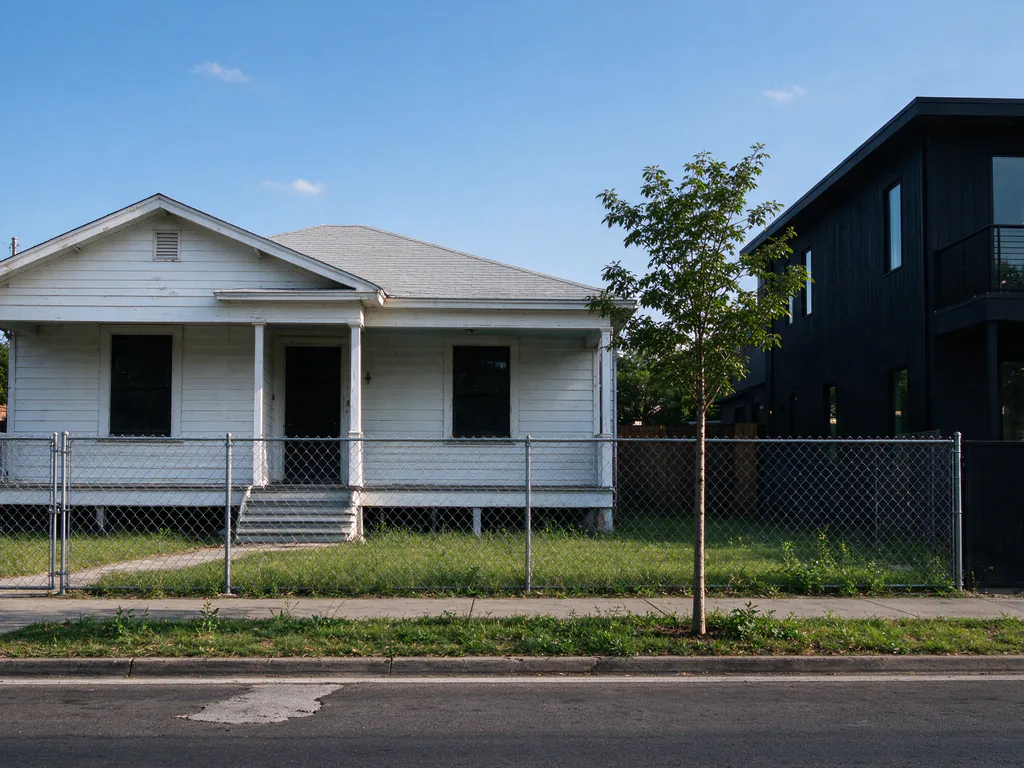
Where a 1940s cottage stands next to a new two-story build, the newer house tells you nothing about the older one’s pipe. Older houses here may have been partly updated over the years, leaving galvanized trunk lines with copper or plastic branches, so the material gets checked at several points: at the main shutoff, at the water heater and at a fixture or two. Where a house sits on piers, as in parts of 78722 and 78702, new lines can run under the floor. City permits mention pier-and-beam or crawlspaces 22 times in 78722 and 15 times in 78702. The guide to identifying your pipes is a good first step.
The insurance question
Homeowners east of I-35 report worry about under-slab plumbing and whether their policy covers it. Coverage depends on the policy. Insurers may pay to open the floor and for resulting water damage while excluding the pipe itself, and wear and tear is a common exclusion. The slab leak insurance guide explains how to read a policy before a claim.
From walk-through to inspection
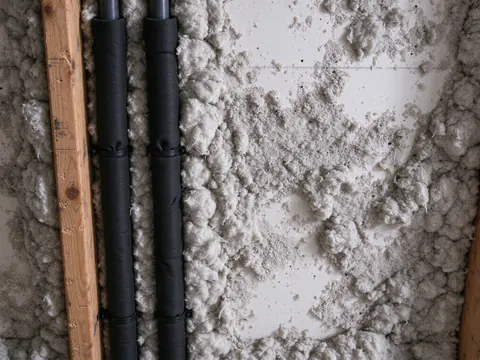
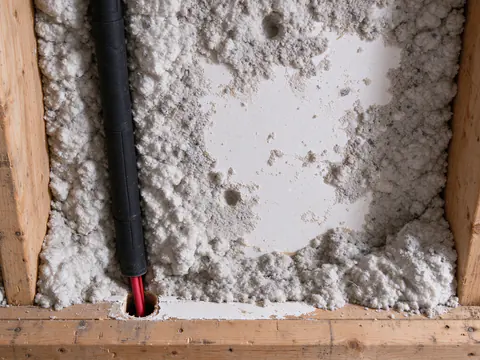
On an East Austin house the walk-through answers two questions at once: what the supply pipe is made of, and whether anything is leaking under the floor. It also takes a static pressure reading from a hose bib, sizes up the attic or the crawlspace and picks the walls that can be opened. Permit, pressure test and wall patching are priced as separate items, which the repipe cost guide breaks down. Each evening the water is turned back on. Walls stay open until the new lines pass a pressure test and the City inspector signs off; old pipe within reach is pulled, and anything buried in walls or slab is sealed off and left.
Across I-35 and the river
West of I-35, North Central Austin shares the galvanized history on firmer soil. Across the river, South Central Austin has the most flagged service lines in the city and a pressure-zone project near Oltorf. In Northwest Austin, slab leaks happen on limestone rather than clay.