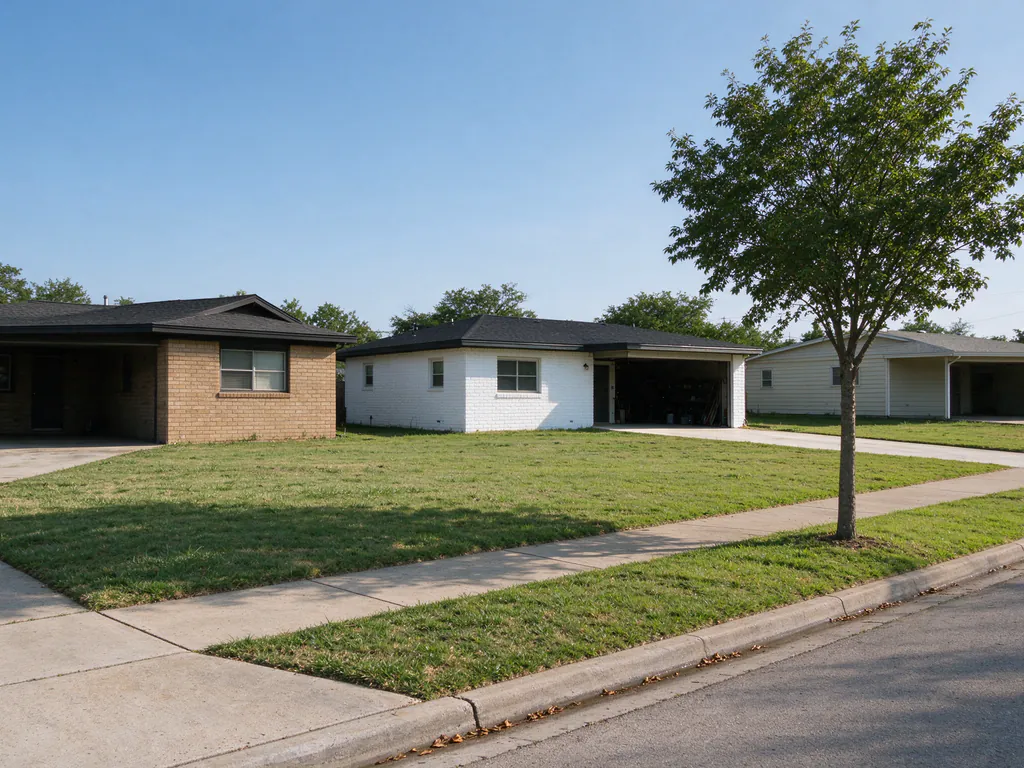
Grackle Repiping Austin repipes houses across North Central Austin, from Crestview and Brentwood to Allandale, Rosedale and Hyde Park, and this is where the work most often starts with galvanized pipe. The housing is old by Austin standards. In ZIP code 78757, nearly six in ten homes were built before 1970 and the median house dates from 1967; in 78756, almost four in ten predate 1960. Houses of that age were commonly plumbed with galvanized steel, and where it has not been replaced, it is now well past the point where it starts closing up.
That history shows up in the City of Austin’s own records. From October 2021 to October 2026, 78757 had more water repipe permits than any other Austin ZIP code: 23 repipes and 5 reroutes. Galvanized pipe is named in more plumbing permit descriptions there than anywhere else in the city.
Why galvanized pipe is the story here, not slab movement
Across much of south and east Austin, under-slab leaks driven by shrinking and swelling clay start the conversation. North Central Austin is different. The repipe permit locations in 78757 sit mostly on Austin-series soils with low shrink-swell, according to the federal soil survey, so the trigger is usually the pipe’s age rather than the ground moving under it.
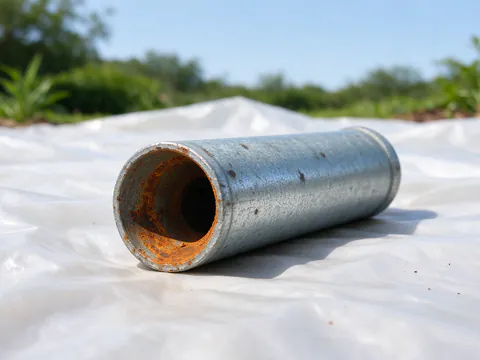
Galvanized steel corrodes from the inside. Rust and mineral scale build up on the pipe wall until a three-quarter-inch line passes far less water than it was sized for, and the smaller branches to showers and sinks close first. The outside of the pipe can look fine the whole time. Homeowners notice weak showers, a toilet that takes a long time to refill and brown water after the water is shut off and turned back on, which knocks scale loose.
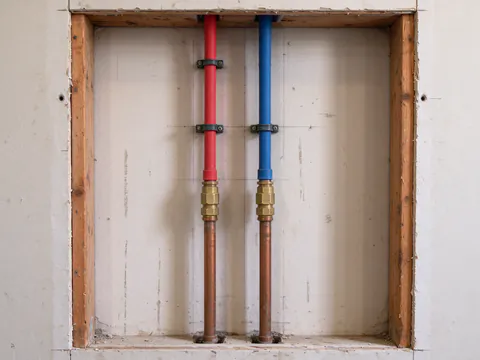
Replacing only the worst branch helps for a while, but the remaining galvanized pipe keeps scaling. That is why houses here tend to move to a whole-house repipe or a planned galvanized pipe replacement, with any steel that stays written into the scope.
The service line letter, and what it does not cover
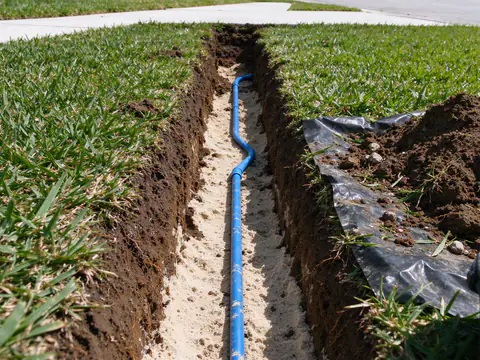
Austin Water owns the pipe from the main to the meter; the property owner owns the line from the meter to the building. Lines with galvanized pipe on the owner’s side and an unclear history are flagged “galvanized requiring replacement,” and since 2025 Austin Water has been replacing them. Owners can sign up to have the service line replaced for free.
Of the 738 flagged lines in Austin Water’s inventory, 240 are in this area’s four ZIP codes: 113 in 78757, 52 in 78751, 43 in 78705 and 32 in 78756. That program stops at the building. If the pipe inside the house is galvanized too, it is still the owner’s to replace, and it makes sense to plan the two together so loosened scale from the inside pipe does not clog new valves and fixtures after the service line is swapped. The water line replacement page explains the difference between the two jobs.
How a North Central Austin repipe usually runs
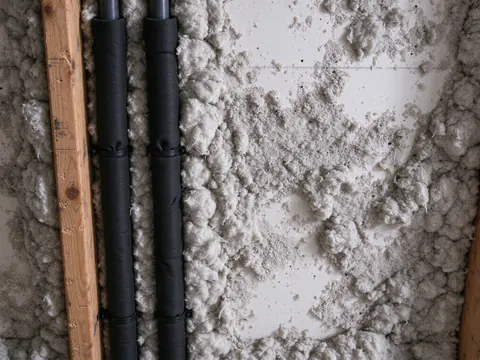
On a one-story slab house, new lines run through the attic and drop down interior walls to the kitchen, the bathroom and the laundry, with R-4 insulation on attic runs as Austin’s code requires. Pier-and-beam houses are part of the mix here too: City plumbing permits mention crawlspaces and pier-and-beam foundations more often in 78751, which takes in Hyde Park, than in any other Austin ZIP code. On those houses new lines can run under the floor and come up through the floor at each fixture, which usually means fewer wall openings.
The walk-through checks static pressure at a hose bib, because Austin’s code requires a regulator and an expansion tank when pressure tops 65 psi. It also checks the water heater connections, which in older houses are often a mix of galvanized nipples and later copper. The permit comes from City of Austin Development Services, and the work is inspected before walls close; the repipe permit guide covers who can pull it.
Older houses, old finishes
Where a house still has plaster walls, built-in cabinets or original tile, those finishes change how access is planned. Openings go where they will be easiest to close, often inside closets or behind fixtures, and the estimate lists each one. Houses that have been remodeled may hide a patchwork of galvanized, copper and newer plastic pipe, so material checks at several points come before any scope is set.
What the water does to fixtures here
North Central Austin is on Austin Water, which lime-softens its supply to an average of about 5.4 grains per gallon with a pH near 9.7. That is moderate water, and the utility says its treatment helps coat pipes and limit corrosion. It does not undo decades of rust inside old galvanized steel. When an old line is cut or a valve is replaced, loosened scale travels downstream and lodges in aerators, shower cartridges and toilet fill valves, so a repipe here includes flushing the new system and cleaning or replacing the screens it reaches. The low water pressure guide explains how to tell scale in a fixture from a restriction in the pipe.
Cold air under the floor
Pier-and-beam houses have a cold space under the whole floor. In the February 2021 storm, Austin issued 123 freeze-related plumbing permits between February and April, and supply pipe in a vented crawlspace sits in the same cold air as the outdoors. A crawlspace route still makes sense for a repipe, but the new lines need insulation and the vents and skirting deserve a look at the same time. Where a house has had freeze breaks before, the burst pipe repair page covers how a repair can also move the line.
Repiping a house in Crestview, Allandale or Hyde Park?
Start with a walk-through that checks the pipe, the pressure and the crawlspace or attic.
Neighbors and nearby areas
West of MoPac, Northwest Austin is newer and sits on limestone, where reroutes outnumber full repipes. To the east, East Austin shares the galvanized history, and South Central Austin has the largest single cluster of flagged galvanized service lines in the city. The guide to identifying your pipes is a good first step anywhere in this area.