

Northwest Austin has as many water reroute permits as any part of the city, and the reason is not the one people expect. From October 2021 to October 2026, 78731, 78750, 78759 and 78730 logged 36 reroutes and 26 water repipes, yet the permit locations sit almost entirely on shallow limestone, where the soil barely moves. A slab leak here is a pipe problem, and rock under the yard and the slab shapes the fix.
Grackle Repiping Austin plans and manages repipes and slab-leak reroutes in Northwest Hills, Highland Hills, Great Hills, Balcones Woods and Jester Estates. The pipe work itself is carried out by licensed and insured plumbing contractors, with the Austin permit in the name of a City-registered responsible master plumber. This page also covers West Lake Hills and Rollingwood, two small cities just south with their own permit offices.
A 1970s and 1980s housing belt
The housing here is concentrated in two decades. Census figures put 61.7% of homes in 78750 between 1970 and 1989, the highest share of any Austin ZIP code, along with 57.7% in 78759 and 48.7% in 78731. Houses of that era were commonly built on slabs with copper supply lines running under or through the concrete, and where those lines are original, they have been carrying water for decades.
78731 is the exception in part. Around Highland Hills and the streets below Mount Bonnell, about a quarter of its homes were built before 1970, galvanized pipe appears in City permit descriptions, and Austin Water flags 29 service lines there as galvanized requiring replacement. It also leads the area in water repipe permits, with 14, alongside its 12 reroutes. 78750 matches those 12 reroutes, and only 78749 has more.
Slab leaks on limestone
On the clays of east and south Austin, a slab leak often comes with talk of the ground moving. That explanation fits poorly here. The federal soil survey maps Eckrant and Brackett soils at most of the repipe and reroute permit locations in these ZIP codes. Eckrant is a very shallow soil over hard limestone, with bedrock four to twenty inches down. All 12 locations in 78759 and all 5 in 78730 rate low for shrink-swell, and 78731 has just 1 high-rated location out of 25.
So the cause is usually in the pipe. Copper can pinhole from the inside, hot water lines expand and contract and wear where they pass through concrete, and high static pressure adds stress at every fitting. When one line under the slab fails, others of the same age and material are carrying the same history. The copper pinhole leak guide explains how those leaks start, and the guide to slab leak repair or reroute covers when a single fix is enough.
Rock pushes the fix overhead
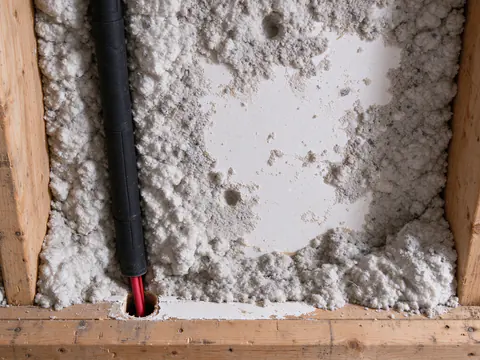
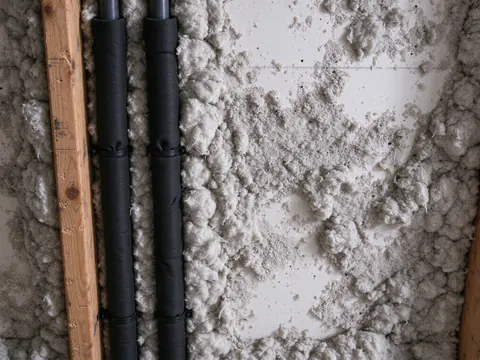
Opening a slab to reach a leak means breaking concrete, digging out what is under it and patching both, and on rock that digging is slow. Rerouting avoids it. The failed run is cut off and sealed at the point where it drops into the floor, and fresh pipe is carried across the attic and dropped inside a wall to the same fixture. More than half of Austin’s water reroute permits mention the attic, overhead runs or the ceiling. The slab leak reroute page describes the work.
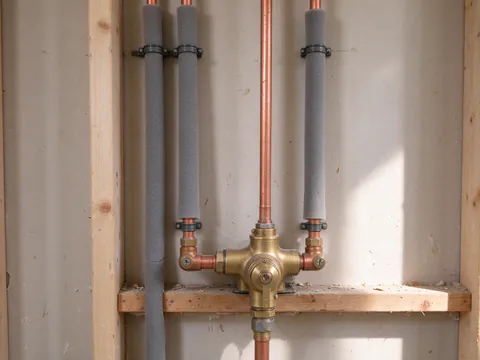
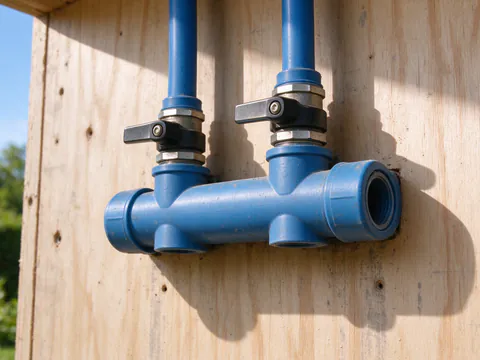
Where several lines have failed, or where copper is pinholing in more than one place, rerouting one line at a time stops making sense, and a whole-house repipe through the attic replaces the system in one permit. In two-story houses, upstairs fixtures are fed from the attic and downstairs lines drop through walls or chases. The choice of pipe matters on long runs: a copper repiping job keeps metal throughout, while a PEX repipe uses fewer fittings. The PEX vs copper guide sets out the trade-offs without declaring a winner.
Rock matters outside the house too. Where a yard line needs replacing, trenching through limestone is harder than through soil, which can tip the route or method. The soil survey also rates these limestone soils highly corrosive to uncoated steel, which is worth knowing where an old galvanized yard line is still in the ground. Texas 811 does not mark private lines that serve only the owner, so those are traced before digging. The water line replacement page covers the options.
Old copper or a slab leak in Northwest Hills or Great Hills?
Book a walk-through: a gauge on the hose bib, a look at the attic and the pipe, then a written estimate with every line shown.
Pressure on the hills
The hills west of MoPac carry some of the highest regulator activity in Austin. Measured against the number of homes, City plumbing permits naming a regulator run 29.9 per 10,000 units in 78730, 25.7 in 78731 (39 permits), 22.0 in 78750 and 17.1 in 78759. All four ZIP codes are also on the list for Austin Water’s program that swaps out old polybutylene service pipe on the utility side, a program aimed first at lines under more than 105 psi. It stops at the meter; the owner’s yard line and the house piping are untouched.
Austin’s local plumbing rule sets the line at 65 psi: above that static pressure, the house needs an approved regulator with a strainer that brings pressure down to 65 psi or less, and a thermal expansion tank on the house side of it (section 608.2 as amended by the City). Regulators wear out, and a failed one passes full street pressure straight through, which shows up as a dripping relief valve at the water heater or banging when a valve shuts. A gauge reading on the hose bib settles whether a regulator, a tank or both belong on the estimate, and the guide to pressure reducing valves covers how they age.
West Lake Hills & Rollingwood
West Lake Hills and Rollingwood sit just south of this area across Lake Austin, and both are separate cities. Their housing is older than the surrounding suburbs: census figures put 41.2% of Rollingwood’s homes and 31.3% of West Lake Hills’ before 1980. Both stand on the same Brackett and Eckrant limestone soils, so the slab-leak and rock-trenching logic above applies, but the permit path does not.
West Lake Hills runs its own building department. The city has adopted the 2021 International Code Council codes, takes permits through MGO Connect and offers a Small Project Application for single projects; its Building and Development page has the current forms. Because its plumbing code is from the International family rather than Austin’s Uniform Plumbing Code, the code sections on an estimate change at the city line. Rollingwood operates its own water distribution system, separate from Austin Water, and its permit rules are confirmed per address before work is scheduled. The water provider for a West Lake Hills address is confirmed per address as well.
Estimate, permit and inspection
Before a price is written, the walk-through identifies the pipe material in more than one spot, takes the static pressure reading, checks how much room the attic gives and marks the walls that can be opened. For a slab leak, the next step is confirming that the leak is on a supply line and not a drain. On the written estimate, the permit, the pressure test and the wall patching each get their own line, and the Austin repipe permit guide explains who is allowed to pull that permit. The house has water again at the close of every work day. Once the new system holds its pressure test and passes the City’s inspection, the walls are closed; old pipe within reach is taken out and the rest is sealed off and left in place.
East of MoPac and up US 183
East of MoPac, North Central Austin has older galvanized houses on firmer soil. Up US 183, Cedar Park uses its own permit office and unsoftened Lake Travis water. South and Southwest Austin shares the reroute pattern and the high pressure, with clay in 78745 and limestone in 78749.