South Central Austin is the one part of the city where two separate Austin Water programs reach the same streets, and both can change what a homeowner should pay for before any pipe is cut. ZIP code 78704 has more service lines flagged “galvanized requiring replacement” than any other Austin ZIP, and the Oltorf corridor near Travis Heights is going through a pressure-zone change that brings utility-installed regulators to some houses.
Grackle Repiping Austin offers and manages repiping across Travis Heights, Bouldin Creek, Zilker and Barton Hills, with the work done by licensed and insured plumbing contractors and the permit pulled by a City-registered responsible master plumber. Because of those two programs, a 78704 estimate starts by sorting out what the utility will handle and what stays with the owner.
The Oltorf at Travis Heights pressure zone
Austin Water serves the city through pressure zones, and the Oltorf corridor near Travis Heights has been part of the Central Pressure Zone. The utility is connecting that area to stronger pressure areas to form a new South Reduced Pressure Zone. To keep pressure in a safe range, Austin Water is installing pressure reducing valves at certain points in the system and on some properties and, where necessary, providing and installing thermal expansion tanks free of charge. Owners whose houses are affected receive a notice and a right-of-entry form. The project page on Austin Water’s site shows the area and the current schedule.
That matters to a repipe because Austin’s plumbing code ties the regulator and the tank together. Under the City’s amendment to section 608.2 of the Uniform Plumbing Code, a house where static pressure is above 65 psi needs an approved regulator with a strainer, set to 65 psi or less, and an NSF 61 expansion tank downstream of it. A regulator and tank are a real line on a repipe estimate. In the project area, that line should wait until the owner knows whether a notice is coming.
Pressure can also change during the project. A static reading taken at a hose bib on the first visit describes the house today, and new pipe is sized on the regulated pressure, so the walk-through notes where a utility valve and tank would sit and keeps that spot reachable. The pressure reducing valve guide explains what a regulator does and how to tell when one has failed, and the Oltorf project explainer walks through what the notice means for a homeowner.
158 flagged service lines
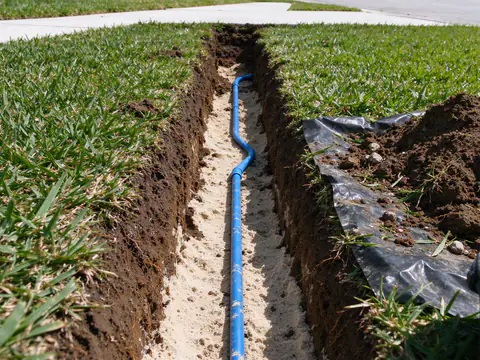
Austin Water’s service line inventory flags 738 active residential meters citywide as galvanized requiring replacement: lines with galvanized pipe between the meter and the building and an unclear history. 158 of them are in 78704, about one in five, more than in any other ZIP code. Austin Water is replacing these lines. Owners can sign up, or replace the line themselves and request reimbursement of eligible expenses.
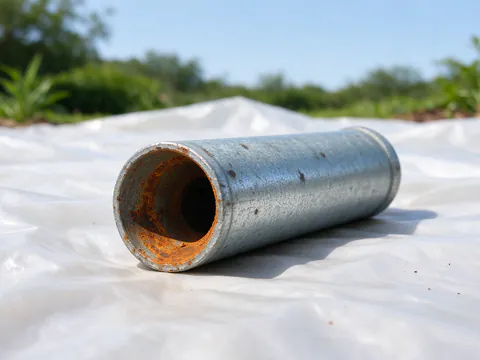
The program covers the yard line from the meter to about five feet from where it enters the building. It does not touch the pipe inside the house. When the yard line is galvanized, the supply pipe indoors is often old too, and a house that has steel indoors still needs its own plan: a galvanized pipe replacement or a whole-house repipe, sequenced so loosened scale from the old inside pipe does not land in new valves after the utility’s crew swaps the line outside. The water line replacement page separates the yard line from the house piping in more detail.
Austin Water’s separate polybutylene service program lists 78704 among the ZIP codes where it is replacing public-side lines, the short run from the main to the meter, and that program gives priority to lines where static pressure tops 105 psi. A new line on the utility side leaves the owner’s yard line and house piping exactly as they were.
Raised bungalows, slab houses and condos
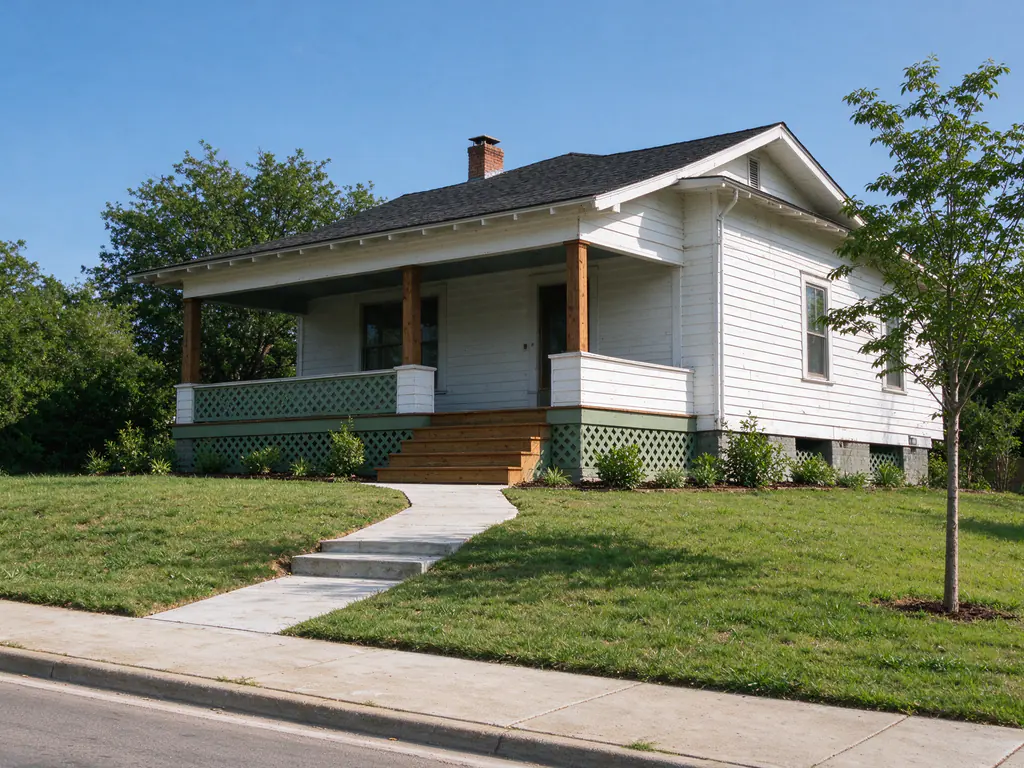
The housing in 78704 is mixed. Census figures put 13.3% of homes before 1960 and another 8.6% in the 1960s, while 28.8% date from 1970 to 1989 and the median house was built in 1989. Half of all homes in the ZIP code are in buildings of five or more units, and only about three in ten are detached houses.
That mix shows in the City’s plumbing permits. 78704 ranks third in Austin for permits that mention pier-and-beam foundations or crawlspaces, with 30, behind 78751 and 78703, and it also has 51 slab mentions. From October 2021 to October 2026 the ZIP had 11 water repipe permits and 9 reroutes, and galvanized pipe appears in 9 permit descriptions, fourth in the city. Of 18 repipe and reroute permit locations checked against the federal soil survey, 8 sit on soils rated low for shrink-swell, 3 on high shrink-swell clay and 7 on urban land or unrated ground, so slab movement is a smaller part of the story here than on the clays farther south in 78745.
Under the floor or through the attic
Where a house stands on piers, the new supply lines can run through the crawlspace and come up through the floor at each fixture. That usually means fewer and smaller wall openings than an attic route, as long as there is room to work under the house. The trade-off is cold air: a vented crawlspace sits close to outdoor temperature, and in the February 2021 storm Austin issued 123 freeze-related plumbing permits between February and April. Crawlspace runs get insulated, and the skirting and vents deserve a look while the work is under way.
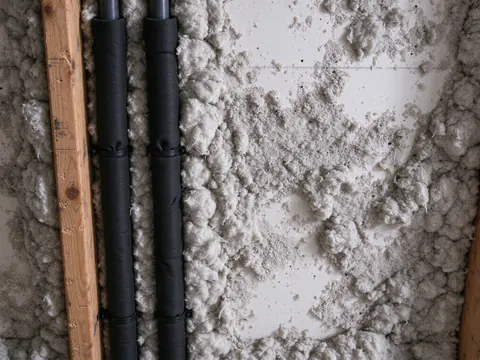
Slab houses from the 1970s and 1980s take the attic route instead. New lines drop down interior walls to the kitchen, baths and laundry, and Austin’s amendment to section 312.6.1 requires R-4 insulation, at least five-eighths of an inch thick, on water lines outside the thermal envelope. Where a house has plaster walls or original tile, openings are planned around them, often inside closets or behind fixtures. The guide to identifying your pipes helps sort out which kind of house and pipe you have before the walk-through.
Repiping in Travis Heights, Bouldin Creek or Zilker?
Start with a walk-through that reads the pressure, checks the pipe and looks for any Austin Water notice before the estimate is written.
Units in shared buildings
In a condo or small apartment building, the supply pipe in one unit often connects to risers and shutoffs that serve others. A repipe may be limited to one unit’s branch lines, or it may need to be planned for the building with the owners or association. The multifamily repiping page covers staging, shutdowns and how the work is split. A partial repipe inside one unit is possible when the shared pipe is in better shape than the branches, and the estimate says plainly which pipe stays.
How a 78704 job runs
The first visit checks the pipe material at several points, measures static pressure at a hose bib, looks at crawlspace or attic access and marks where walls can open. It also notes the service line status on Austin Water’s inventory and whether a pressure-zone notice has arrived. The estimate lists the permit, the pressure test and the patch scope as separate lines. During the work, water goes back on at the end of each work day. The new system is pressure tested, then inspected by the City before walls close. Old pipe that can be reached is removed, and the rest is capped and abandoned in place. The repipe cost guide explains what sits inside each line.
Where 78704 meets its neighbors
South of Ben White, South and Southwest Austin is newer slab housing where reroutes after slab leaks and high pressure lead the conversation. North of the river, North Central Austin has the second-largest cluster of flagged service lines, and East Austin combines older galvanized pipe with patches of expansive clay.