Georgetown Water says plainly that parts of its system run at a standard operating pressure of 80 to 100 psi, and it recommends that every customer install a private pressure-reducing valve. That one fact changes how repiping in Georgetown, TX is planned. Grackle Repiping Austin offers and manages whole-house repiping, slab leak reroutes and partial repipes across Georgetown, from Old Town and the courthouse square to Wolf Ranch, Berry Creek and Sun City, with licensed and insured plumbing contractors doing the work. Before anyone talks about PEX or copper, the job starts with a gauge on a hose bib.
Pressure first: what 80 to 100 psi does to a plumbing system
Water pressure is not uniform across Georgetown. The utility’s own FAQ says it is not uncommon for some areas to run at 80 to 100 psi and others at 45 to 50 psi. State rules from TCEQ set a 35 psi minimum and no maximum. Where new development could exceed 100 psi, the City requires the developer to install a mainline pressure-reducing valve, but below that, controlling pressure inside the house is the owner’s job. Georgetown Water notes that fixtures are generally designed for 60 to 80 psi and that homeowners commonly keep their pressure at 60 to 70.
High static pressure loads every joint, valve and fixture in the house all day, every day. The strain shows up as water hammer when a valve snaps shut, toilet fill valves that never quite stop, faucet cartridges that wear early and a water heater relief valve that drips. Pipe that has already lost wall thickness to age or corrosion fails sooner under that load. The pressure-reducing valve guide explains how a regulator works and how it fails.
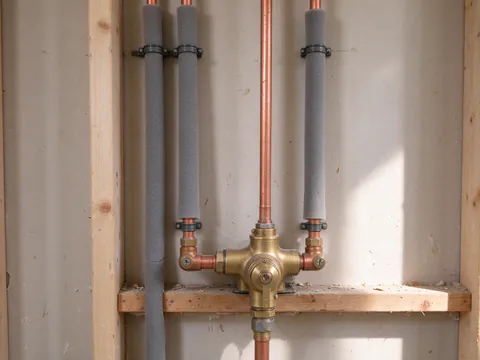
A regulator also closes the system. Once a pressure-reducing valve is installed, water heated in the tank has nowhere to expand back into the street, so thermal expansion needs its own control, usually an expansion tank. On a Georgetown repipe, the regulator, its setting and expansion control are planned with the new lines rather than added later. The pressure setting and the required components follow the code Georgetown enforces, which is confirmed with the permit; Austin’s 65 psi amendment does not apply here.
Outside city limits, still a Georgetown permit
The City requires a building permit to install, alter, repair, remove or replace any plumbing system. Less common is how far that reaches. In the ETJ and the county, Georgetown’s building permits apply wherever the City of Georgetown is the water, wastewater or electric provider. A house on Georgetown utilities but outside city limits still needs a City permit for a repipe.
Georgetown adopted the 2021 International Residential Code, along with the 2021 energy code and the 2023 electrical code. The plumbing code edition for a given address is confirmed with the permit office. The estimate lists the permit, the pressure test and the wall patching as separate lines, and the repipe permit guide covers what a permit buys a homeowner and why inspections happen before walls close.
Two lakes, and a disinfectant to note
Georgetown’s water comes from Lake Georgetown, under a Brazos River Authority contract, and from Lake Travis through LCRA. Some Lake Georgetown water is treated by the City of Round Rock. The 2025 report lists total chlorine as the disinfectant. It does not publish a hardness value, so any claim about Georgetown water scaling pipes has to come from what is found at the house: crusted aerators, a scaled water heater or a slow shower cartridge. The low water pressure guide explains how to tell scale in a fixture from a restriction in the pipe and from a regulator that is set too low.
Newer houses, different reasons to repipe
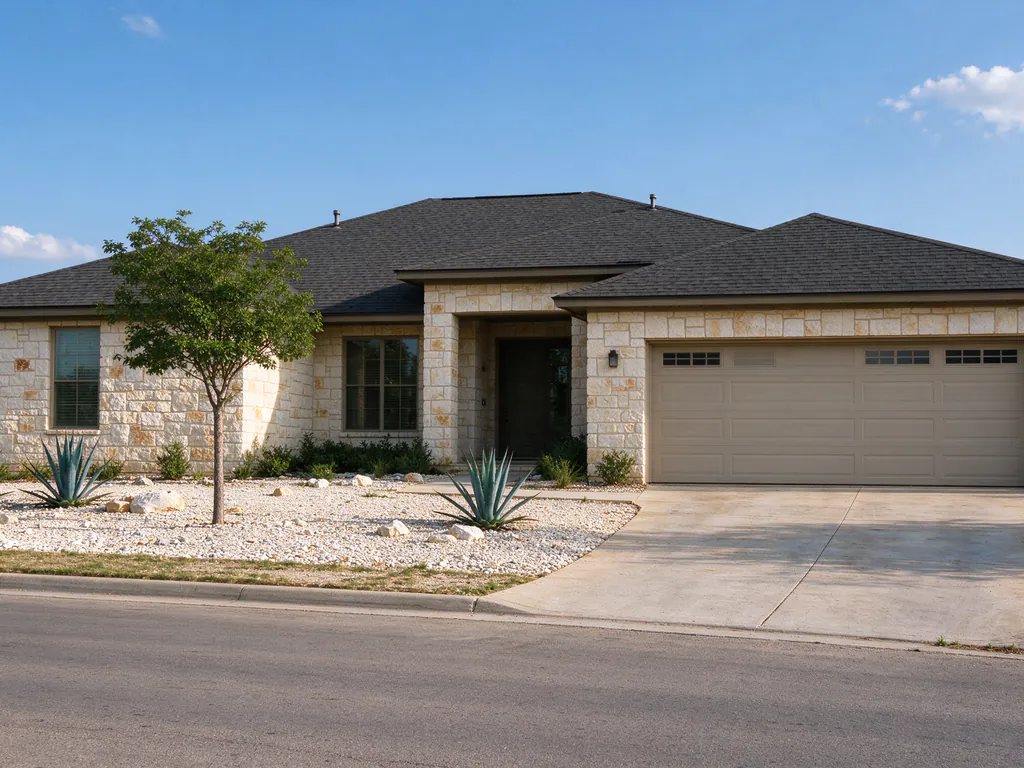
Of Georgetown’s 37,206 homes, 68.7% were built in 2000 or later and only 9.1% predate 1980, according to the Census Bureau; the median house dates from 2008. Repipe decisions here are seldom about galvanized pipe wearing out with age. They come from a slab leak, a run of failing fittings, a remodel that opens walls anyway, or years of high pressure on a system that never had a working regulator.
The ground is also different from the clay belt east of Interstate 35. A federal soil survey sample around Georgetown found no high shrink-swell soils at any of nine points; the main soils are Georgetown and Doss, both formed over limestone. Where a slab leak happens on that ground, the pipe or a fitting is the likelier cause than seasonal slab movement. The repair decision is the same, though: break the floor to fix one spot, or retire the line with a slab leak reroute through the attic. For houses where most of the system is sound, a partial repipe can replace the failing branches.
Repiping a house in Georgetown?
The walk-through starts with a static pressure reading, then checks the pipe material and where walls can open.
A Georgetown job, start to finish
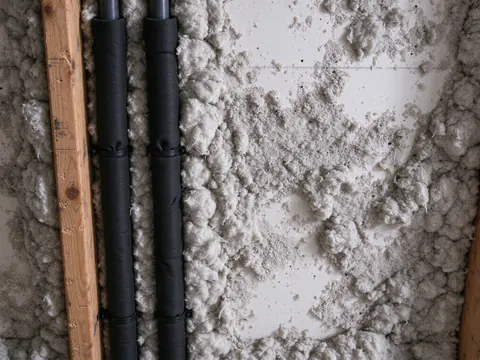
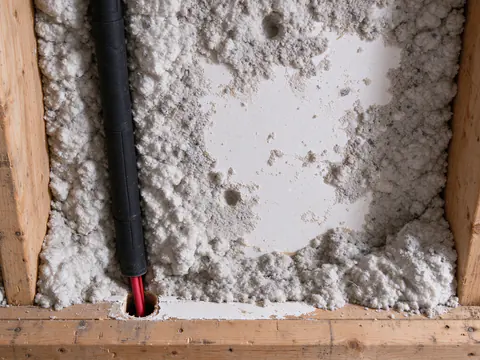
The first visit measures static pressure at a hose bib, checks the pipe material at several points, looks at attic or crawlspace access and marks where walls can open. In a slab house, new lines usually run overhead and drop to each fixture group, with attic runs insulated against the kind of freeze central Texas saw in February 2021.
Water is back on at the end of each work day. The finished system is pressure tested, then inspected by the City before walls close. Reachable old pipe is removed and the rest is capped and abandoned in place. The regulator and expansion control go in as part of the same job, so the new pipe never sees unregulated street pressure. Material choice is its own decision; the copper repiping page and the PEX repiping page lay out the tradeoffs, and the guide to how long a repipe takes covers the schedule.
Pricing a Georgetown job
Repipe prices follow the house, not the city name: square footage of pipe, the number of fixture groups, attic access, the number of wall openings and the patching. A typical Austin-area range for a whole-house repipe is $4,500 to $15,000+. What Georgetown adds is pressure work, a regulator and expansion control, which appear as their own lines. The repipe cost guide explains every driver.
North along I-35
South on Interstate 35, Round Rock runs its own one-permit system and reports very hard water. To the southwest, Cedar Park and Leander draw on Lake Travis. Inside Austin, North Central Austin is where older galvanized pipe drives the work.